Tweed Satchel Bag Manufacturer in China
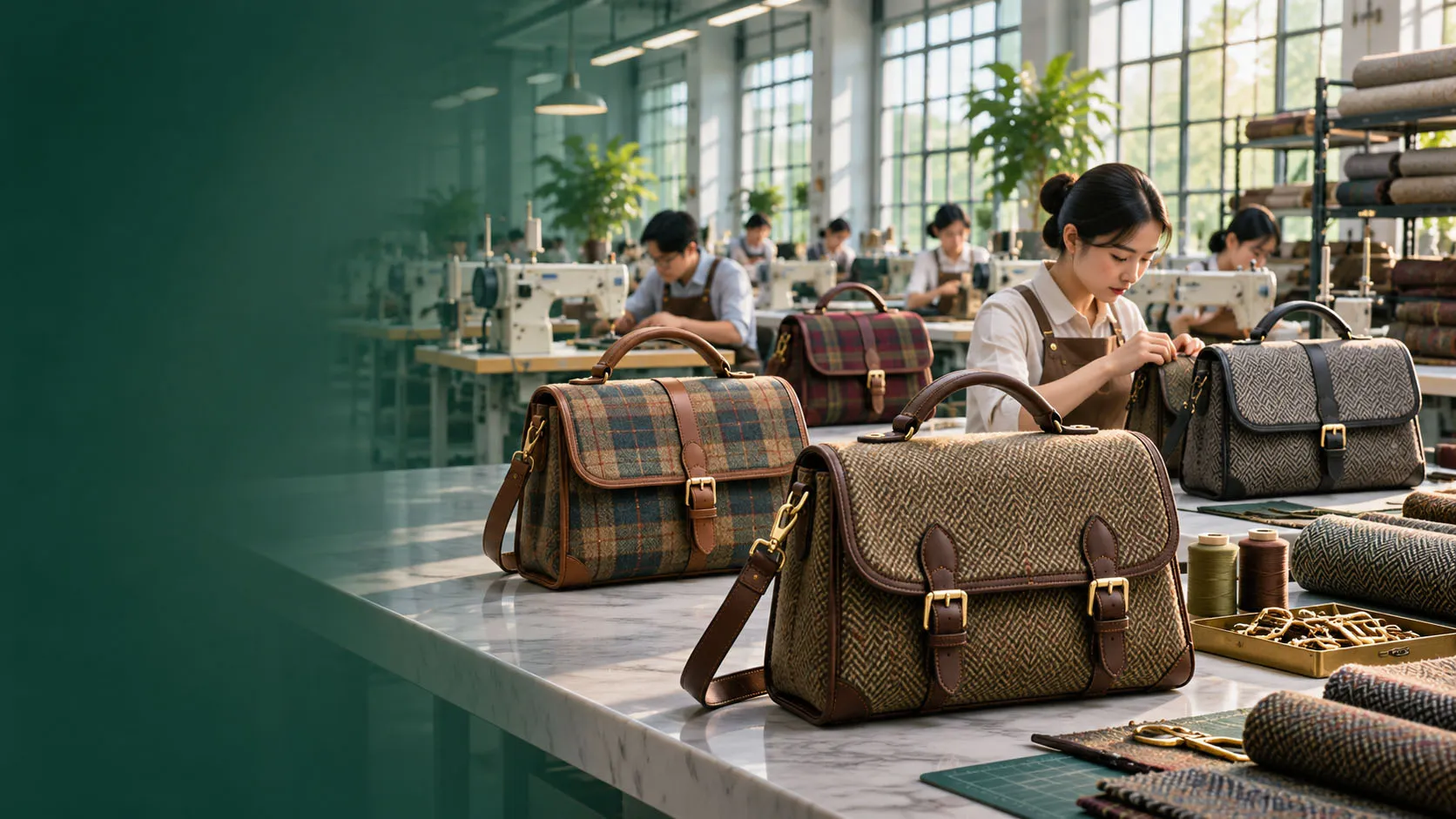
Tamador manufactures custom tweed satchel bags in China for fashion brands, importers, and wholesalers. We support plaid and herringbone tweeds, flap-front construction, trim selection, private labeling, and OEM & ODM production.
Warum sollten Sie sich für Tamador entscheiden?
Partner with Tamador for custom tweed satchel bag manufacturing, combining careful pattern matching, reliable flap construction, flexible OEM & ODM development, quality control, and export support for international brands.
20 Jahre Erfahrung in der Fertigung
With over 20 years of bag manufacturing experience, Tamador supports fashion brands with bag pattern development, fabric selection, prototype revisions, and repeatable bulk production.
Custom Tweed Satchel Development
From drawings to approved samples, we tailor tweed patterns, flap shapes, handles, detachable straps, linings, edge finishes, hardware, logos, and packaging to your collection.
Strenge Qualitätskontrolle
Our IQC, IPQC, and OQC checks cover tweed fabric consistency, pattern alignment, seam quality, flap symmetry, strap attachment strength, hardware operation, and finished appearance.
Flexible Produktionskapazität
We support flexible order quantities, multiple tweed patterns, color combinations, and design variations. From sample adjustments to bulk production, we coordinate materials, scheduling, and quality requirements to meet different brand needs.
Weltweite Exportunterstützung
We assist international buyers with sample shipping, private-label packaging, export documentation, and logistics coordination for smooth overseas sourcing.
Tweed Fabrics & Pattern Matching
Choose plaid, herringbone, bouclé, and other woven tweeds with PU or leather trims. We focus on fabric stability, fraying control, precise pattern alignment, and consistent flap construction for refined finished bags.
Tweed Satchel Bag Manufacturing Process
From fabric and pattern evaluation through sampling, cutting, sewing, quality inspection, and delivery, Tamador coordinates each stage of custom tweed satchel bag manufacturing.
Planung & Beratung
Share sketches, tech packs, or reference images. We review satchel proportions, flap overlap, handle placement, strap options, pocket layout, and tweed pattern alignment.
Materialbeschaffung
We help source suitable tweeds, linings, interlinings, PU or leather trims, buckles, magnetic closures, and zippers according to your design, durability needs, and target price.
Entwicklung von Mustern
We build prototypes to assess plaid alignment, flap symmetry, seam allowances, edge protection, strap comfort, interior organization, and how the bag holds its shape.
Massenproduktion
After sample approval, we inspect tweed fabrics and control pattern-matched cutting, edge reinforcement, sewing, assembly, and finishing to maintain consistent proportions, flap alignment, and craftsmanship throughout bulk production.
Qualitätsprüfung
IQC, IPQC, and OQC checks verify fabric quality, check placement, stitching, flap closure, trim bonding, strap strength, dimensions, and consistency with the approved sample.
Verpackung und Versand
Choose branded labels, hangtags, dust bags, and protective packing. We prepare export shipments to reduce crushing, deformation, and abrasion in transit.
Tweed Satchel Bag Styles We Manufacture
Develop a distinctive tweed satchel collection with six adaptable silhouettes. Select coordinated checks, woven textures, flap constructions, trim colors, straps, hardware, and private-label details.
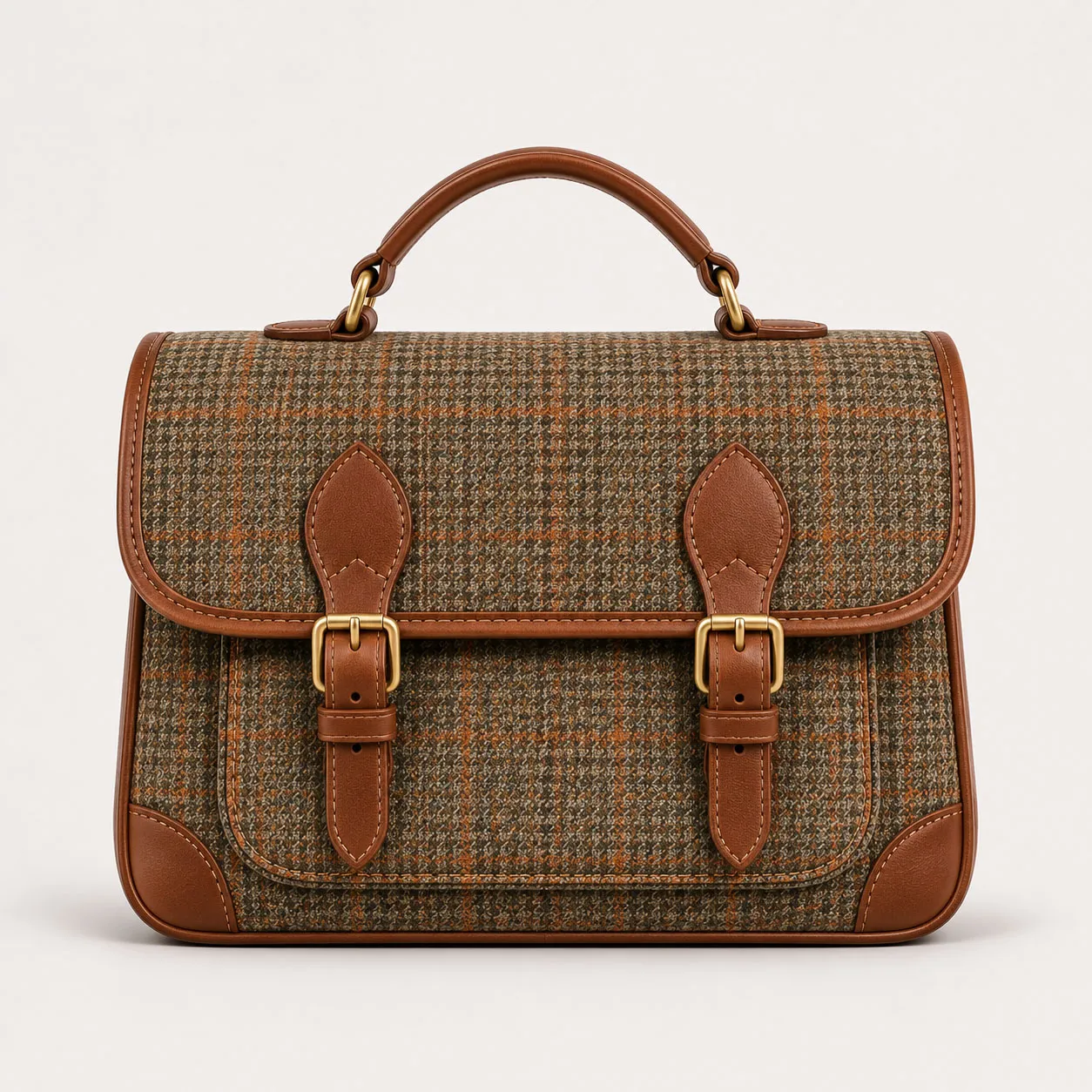
Classic Tweed Satchel Bag
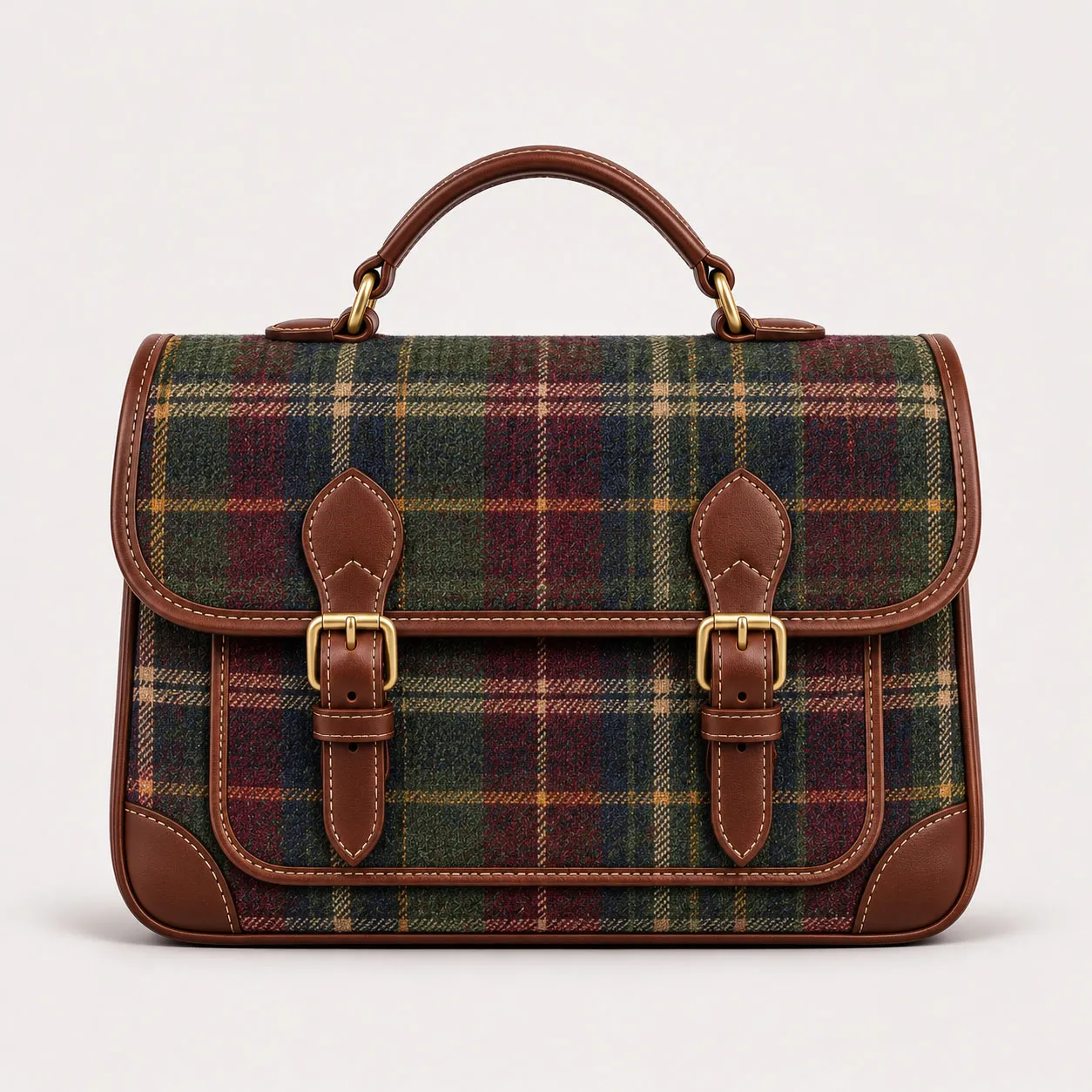
Tweed-Umhängetasche mit Karomuster
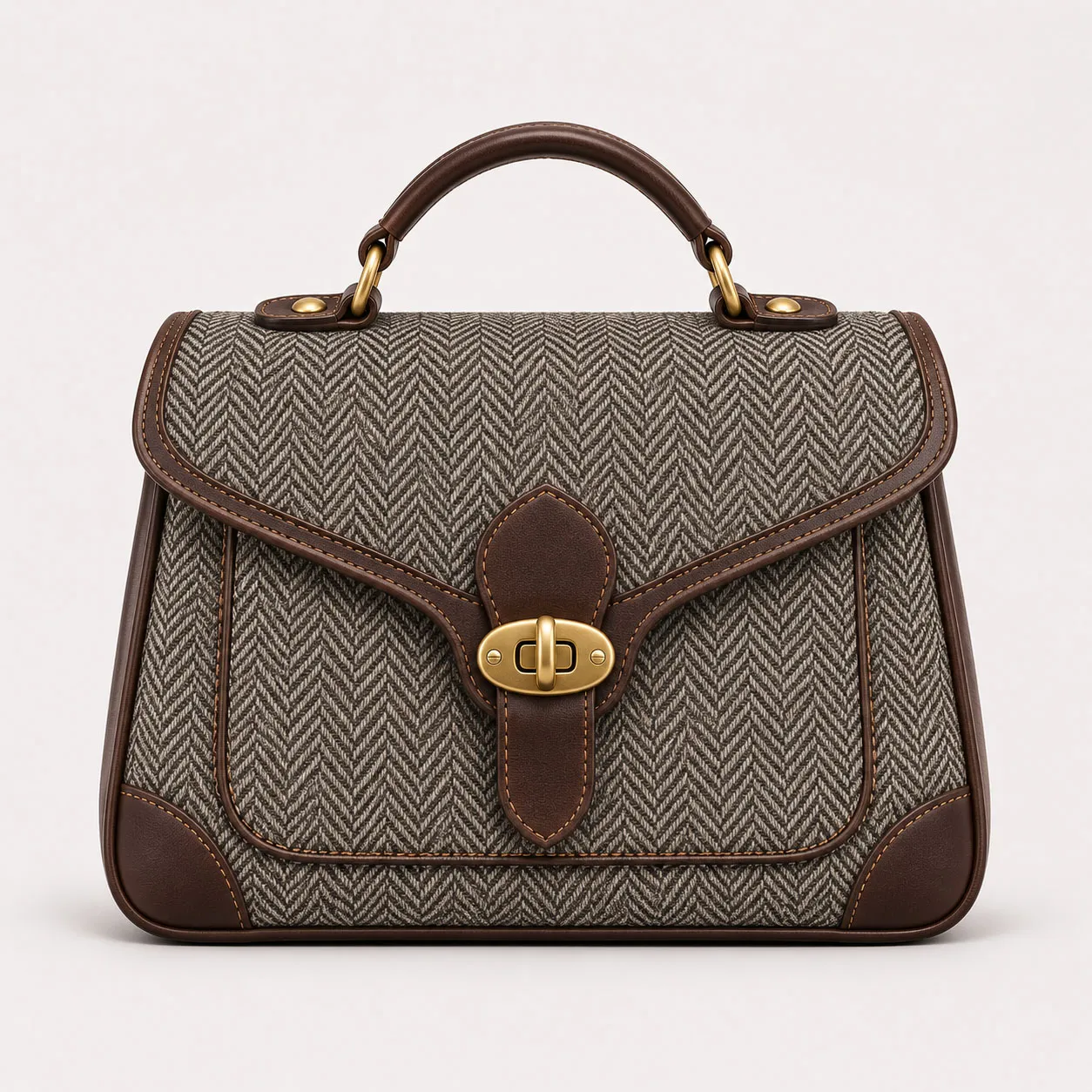
Herringbone Tweed Satchel Bag
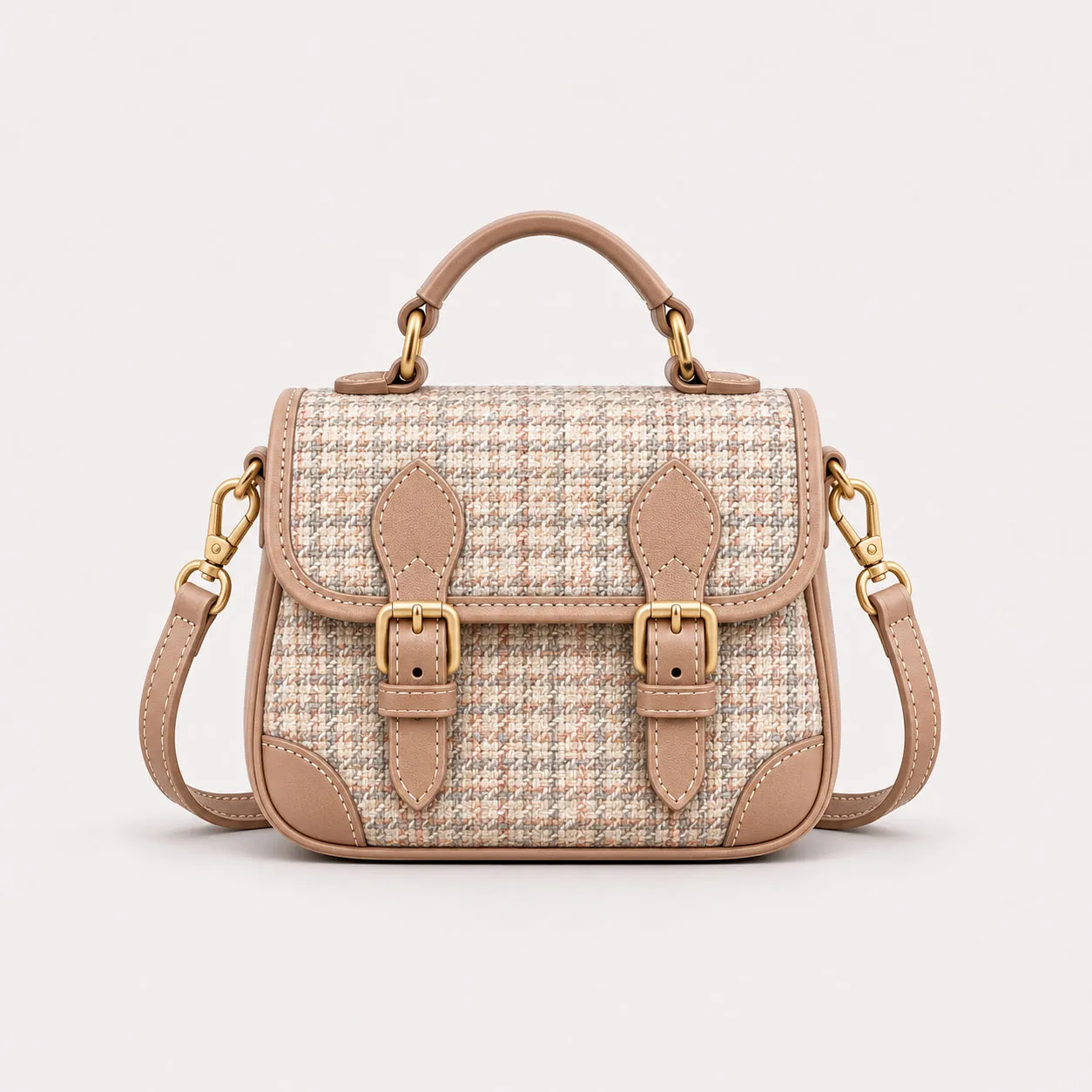
Mini Tweed Satchel Bag
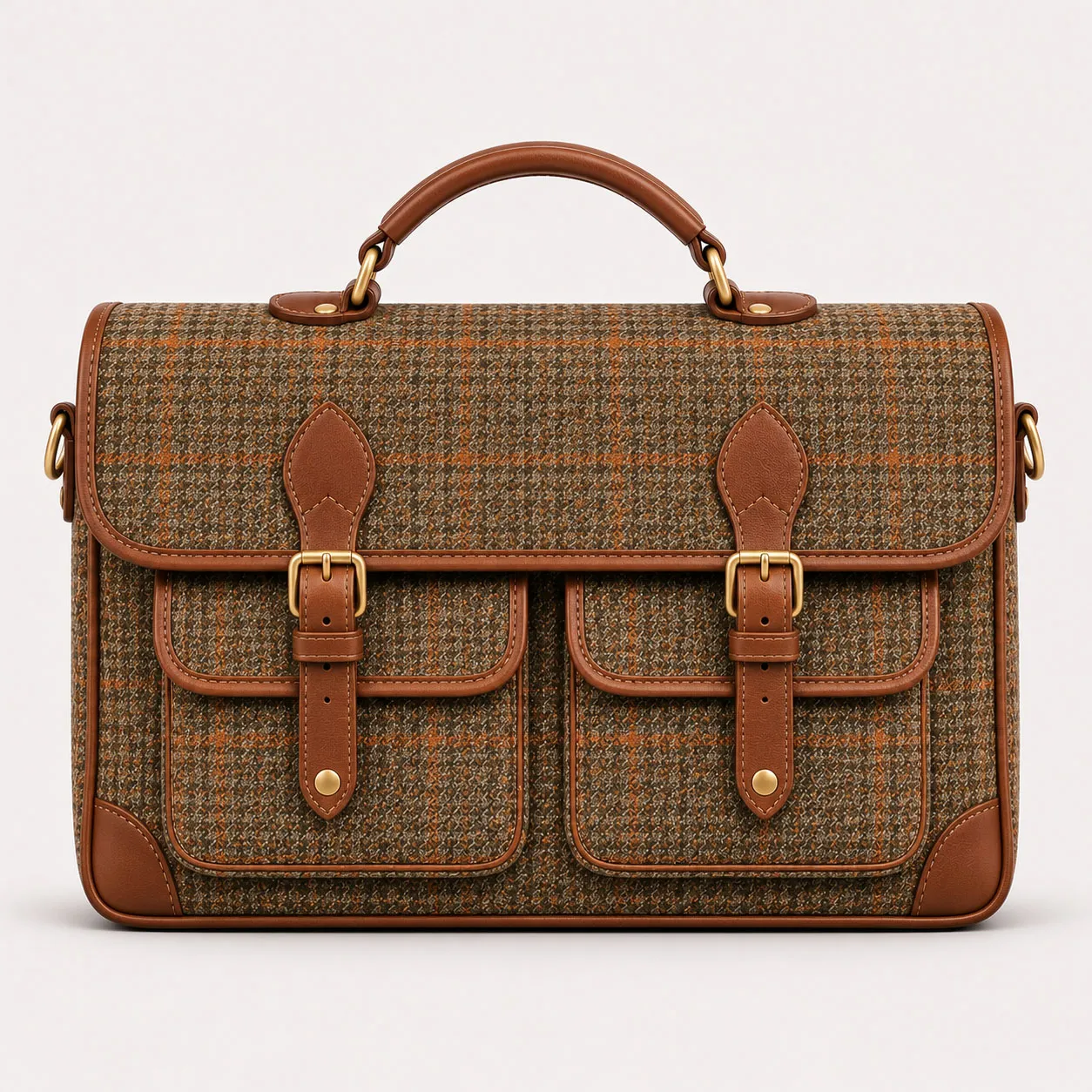
Tweed Laptop Satchel Bag
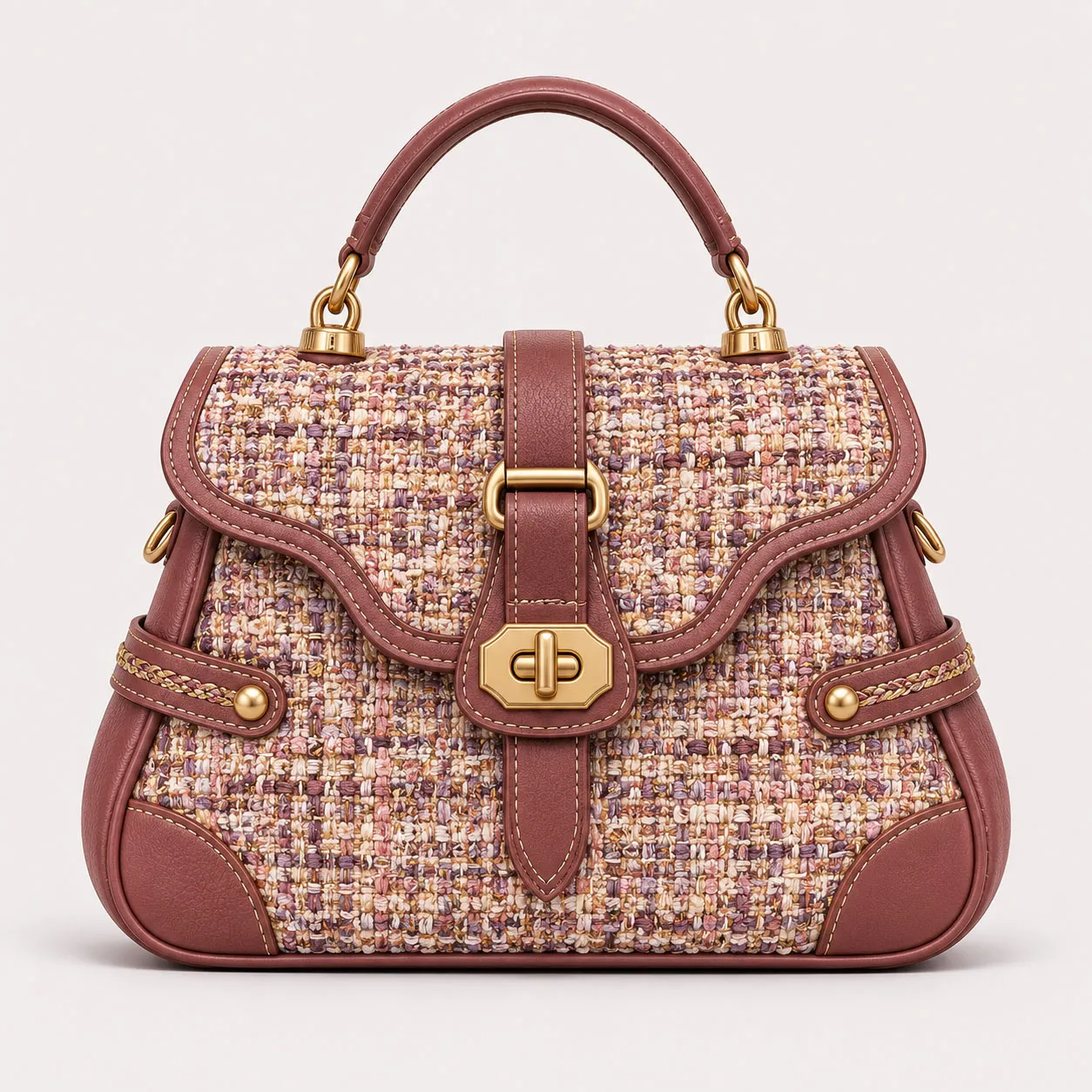
Custom Tweed Satchel Bag
Tweed Satchel Bag Customization Solutions
Build a signature tweed satchel collection with customizable woven patterns, bag proportions, flap and closure designs, strap options, protective trims, linings, and private-label branding.
-
Logos und Eigenmarken
Use metal logo plaques, woven brand labels, embossed trim patches, branded zipper pulls, hangtags, dust bags, and custom packaging to express your brand identity.
-
Tweed Patterns, Colors & Trims
Choose plaid, herringbone, bouclé, and other woven tweeds. Customize yarn colors, PU or leather trims, linings, and hardware, with attention to pattern alignment, fabric stability, and edge reinforcement.
-
Flaps, Straps & Interior Details
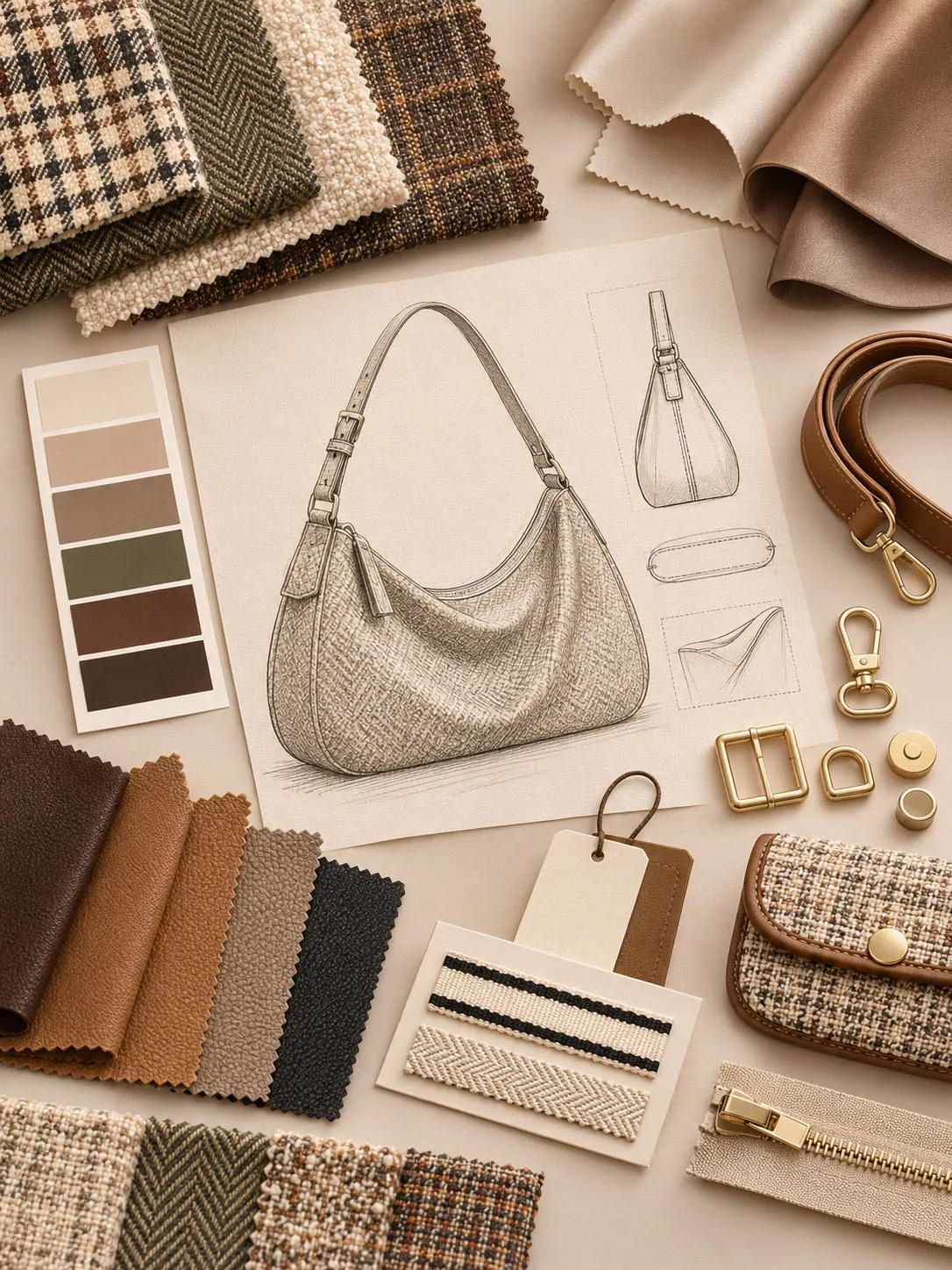
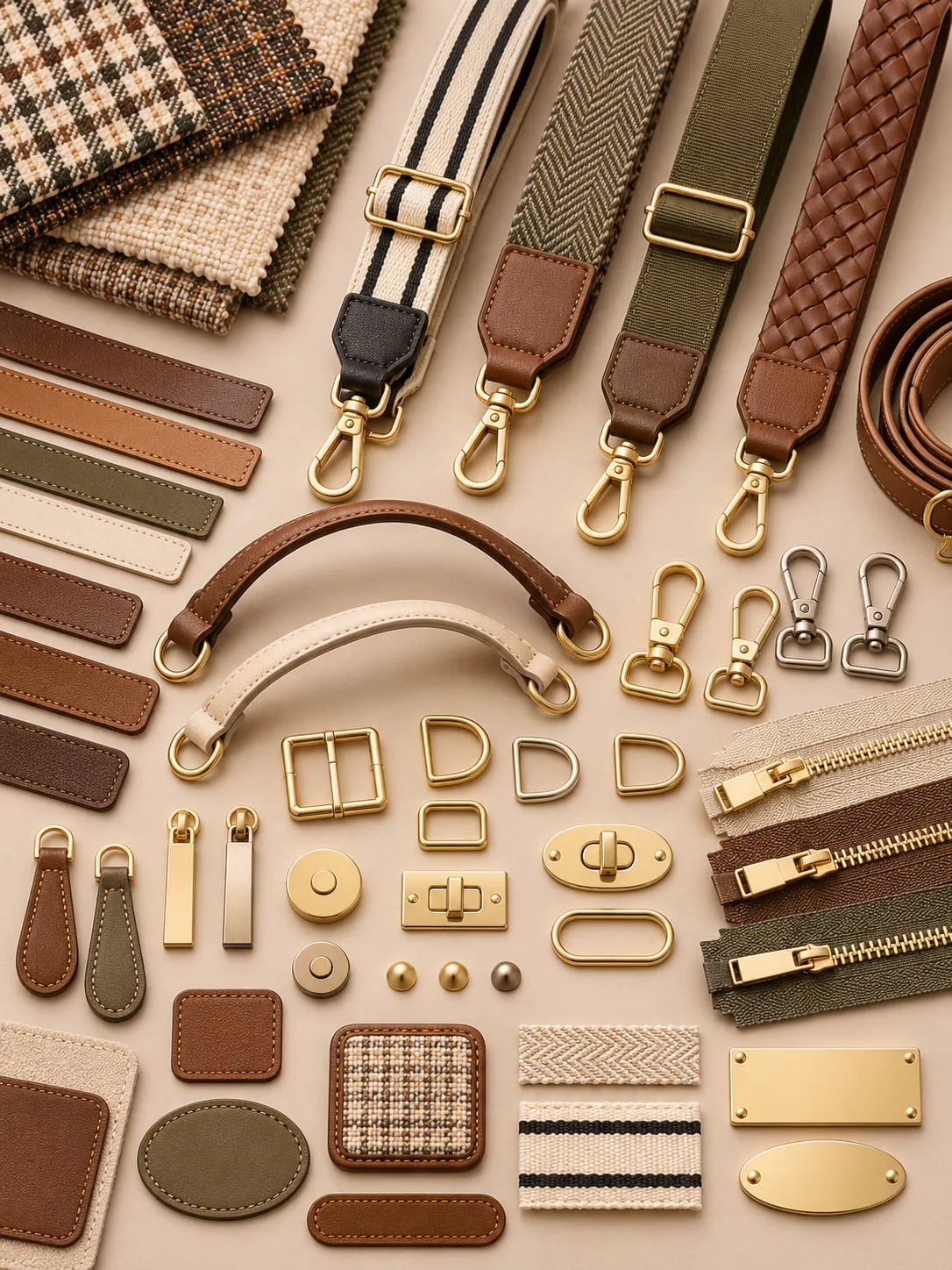
Customize flap shapes, buckle or magnetic closures, top handles, detachable straps, laptop sleeves, interior pockets, and structural reinforcements to achieve the desired appearance and functionality.
Our Tweed Satchel Bag Manufacturing Capabilities
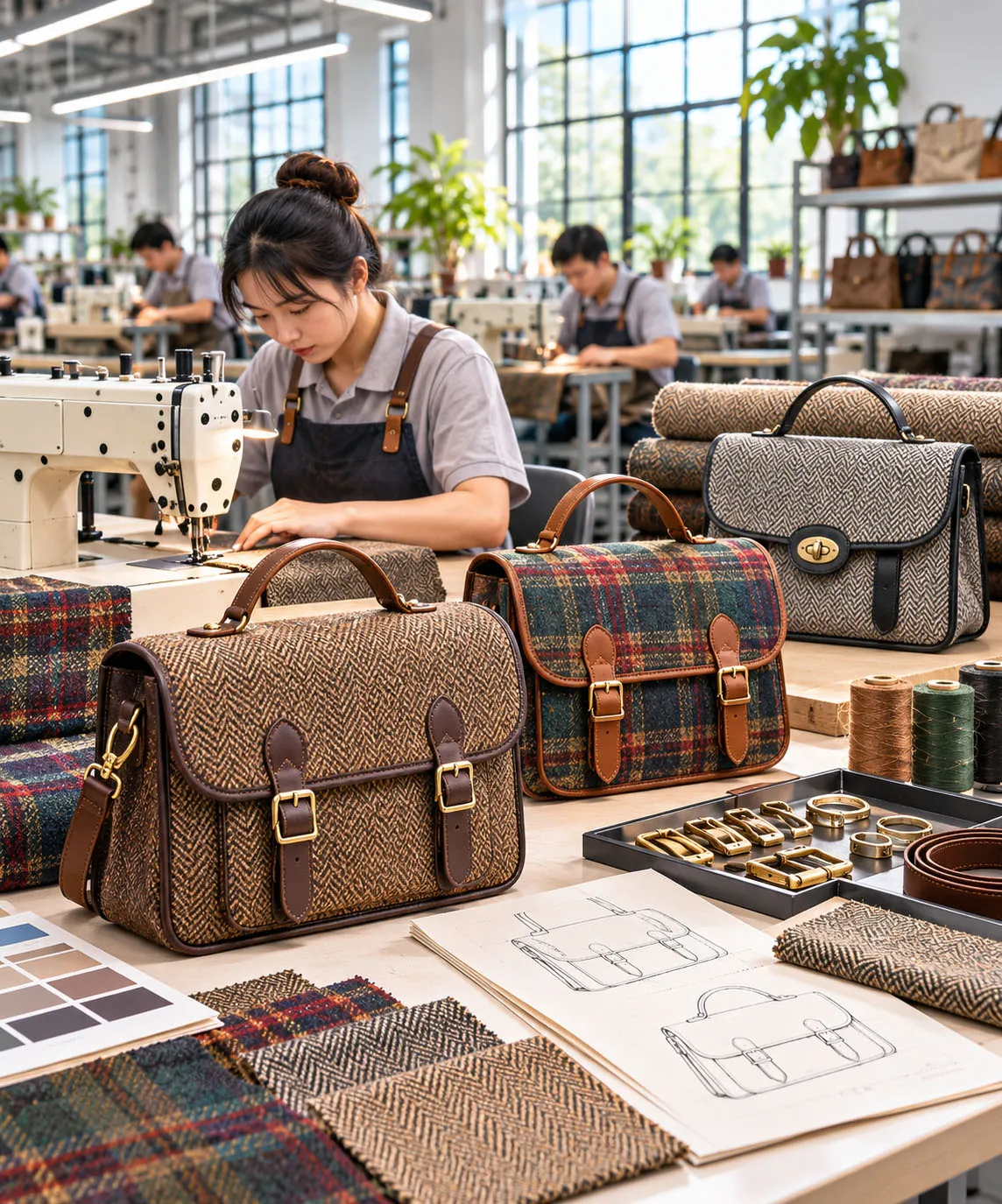
Tamador supports OEM & ODM tweed satchel bag production from pattern engineering and sample development to fabric sourcing, cutting, assembly, finishing, inspection, and branded packaging.
Tweed fabrics require precise cutting, pattern alignment, and reinforced construction. Our production team manages fabric stability, flap structure, and trim integration, while IQC, IPQC, and OQC inspections help ensure consistent quality across bulk orders.
How to Tell If a Fabric Is Tweed?
Tweed is identified by its woven texture, distinctive patterns, and fabric construction. Examine the weave, surface feel, pattern details, and fiber composition to distinguish genuine tweed fabrics from printed imitations.
Check the Woven Texture
Authentic tweed is a woven fabric with interlaced yarns that create a visible surface texture. Look closely at the threads rather than relying on printed patterns. The weave may appear coarse, soft, compact, or loosely textured depending on the fabric construction.
Examine Tweed Patterns
Tweed often features herringbone, houndstooth, checks, or multicolored yarn effects. These patterns are usually formed through the weaving process rather than surface printing. Check the fabric closely to identify how the pattern is constructed.
Feel the Fabric Surface
Traditional wool tweed often has a textured, slightly coarse hand feel, while modern blends may be softer or smoother. Examine the fabric's thickness, flexibility, and surface texture. Different tweed constructions can produce noticeably different finishes.
Verify Fiber Composition
Traditional tweed is commonly made from wool, but modern tweed fabrics may contain cotton, polyester, acrylic, or blended fibers. Check supplier specifications and composition labels. For bag manufacturing, also evaluate durability, fraying resistance, and structural stability.
How to Tell If a Fabric Is Tweed?
Tweed is identified by its woven texture, distinctive patterns, and fabric construction. Examine the weave, surface feel, pattern details, and fiber composition to distinguish genuine tweed fabrics from printed imitations.
Tweed Satchel Bag Manufacturer FAQ
Find answers to common questions about tweed bags, fabric types, timeless styles, pricing, cleaning, wool content, and the distinctive characteristics of tweed.
Are tweed bags in style?
Yes. Tweed bags remain a popular choice for classic, vintage-inspired, and contemporary fashion collections. Their woven textures, checks, and herringbone patterns offer a timeless look, while modern silhouettes and leather trims make them suitable for everyday and seasonal styles.
Are tweed bags worth it?
Tweed bags can be worth it for buyers who appreciate distinctive textures, classic styling, and versatile designs. Their value depends on fabric quality, lining, reinforcement, stitching, hardware, and overall construction. A well-made tweed bag can offer lasting style with proper care.
Why is tweed so special?
Tweed is known for its rich woven texture, distinctive yarn colors, and traditional British and Irish textile heritage. Patterns such as herringbone and checks give the fabric visual depth, while its versatility makes it attractive for clothing, accessories, and premium handbag collections.
Is tweed expensive?
Tweed prices vary depending on fiber composition, weaving complexity, fabric weight, supplier, and order quantity. Premium wool tweeds and specialty woven patterns can cost more than standard synthetic blends. For bag manufacturing, material consumption, pattern matching, and reinforcement also affect production costs.
How to clean a tweed bag?
Remove loose dust with a soft brush and gently blot fresh stains with a clean, dry cloth. Follow the bag manufacturer's care instructions and avoid soaking the fabric unless specifically permitted. For stubborn stains, consult a professional cleaner experienced with tweed and mixed-material bags.
Where is tweed from?
Tweed has strong historical roots in Scotland and Ireland, where woolen fabrics were traditionally woven for durable outdoor clothing. Scottish and Irish tweeds remain well known, although tweed fabrics are now manufactured in various countries using traditional and modern textile techniques.
What type of fabric is tweed?
Tweed is a textured woven fabric traditionally made from wool. It may feature plain, twill, herringbone, or other weave structures, often with blended yarn colors. Modern tweed-style fabrics can also use cotton, polyester, acrylic, or mixed fibers for different textures, weights, and applications.
What does tweed look like?
Tweed typically has a visibly woven, textured surface with mixed yarn colors and distinctive patterns. Common appearances include herringbone, checks, houndstooth, and flecked finishes. Depending on the weave and fibers, tweed can look rustic, refined, chunky, or softly textured.
Is tweed 100% wool?
Not always. Traditional tweed is commonly made from wool, and some premium varieties use 100% wool. However, modern tweed fabrics may include cotton, polyester, acrylic, or other blended fibers. Check the supplier's fiber composition specifications to confirm the actual material content.
Ready To Start Your Tweed Satchel Bag Project?
Bring your tweed satchel collection to life with Tamador. Share your preferred tweed pattern, bag size, flap design, trims, hardware, branding, colors, and estimated order quantity for OEM & ODM development and a tailored quote.
HuaDu, Guangzhou, China