
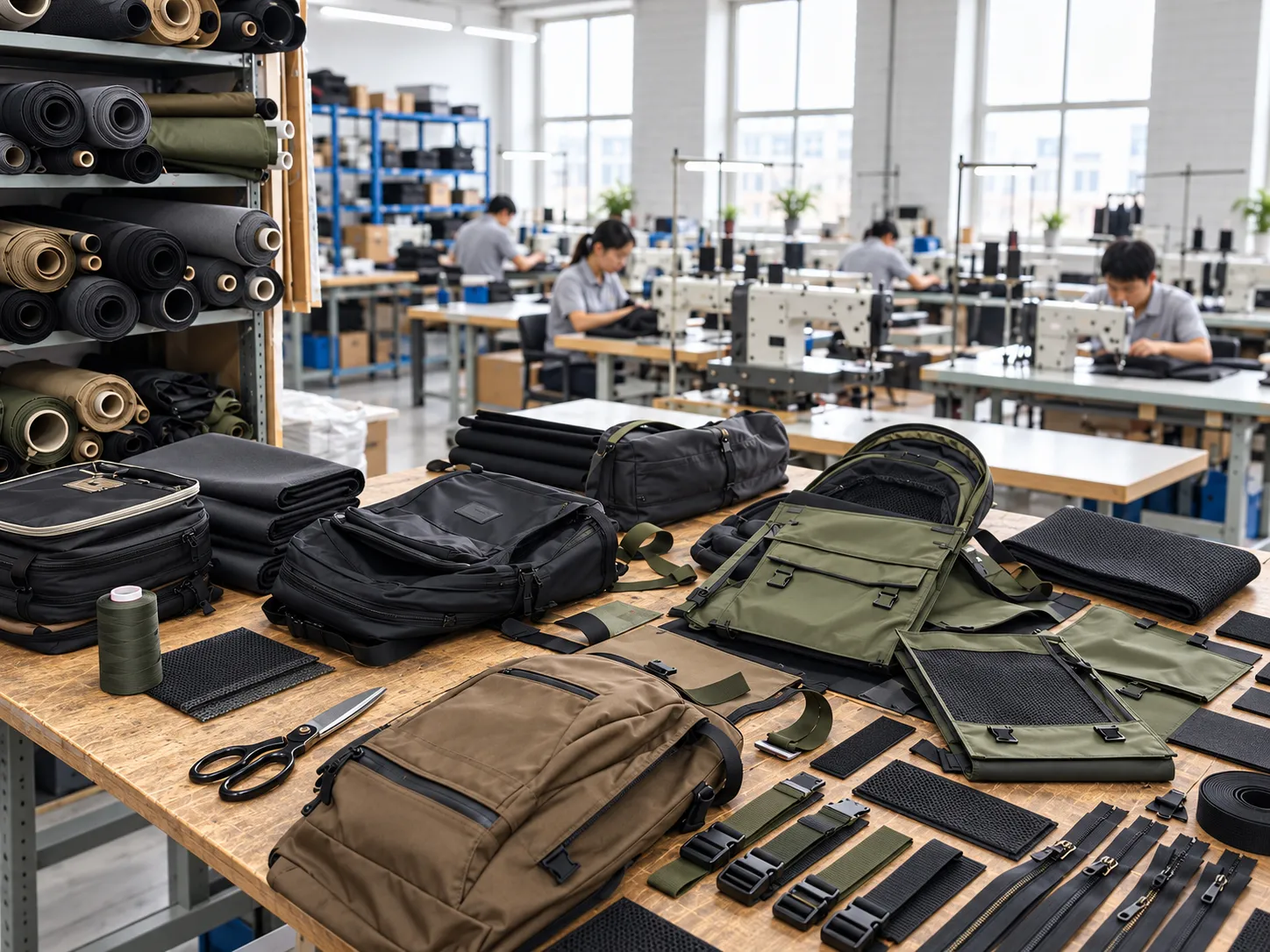
If you look at the label inside a backpack, you may see a familiar brand name followed by “Made in China,” “Made in Vietnam,” “Made in India,” or another country.
But that simple label does not tell the whole story.
Most backpack brands do not manufacture every bag in their own facilities. Design, product development and branding may happen in one country, while fabric sourcing, cutting, sewing, assembly and quality inspection take place somewhere else.
So where are backpacks actually made?
Most large-scale backpack manufacturing takes place in Asia, particularly in China and Vietnam, with India, Bangladesh, Cambodia, Indonesia and Pakistan also supporting different parts of the global bag industry. The United States and Europe retain smaller manufacturing sectors focused more heavily on premium, specialist and small-batch production.
Understanding where backpacks are made is therefore not just about comparing countries. It means understanding the manufacturing clusters, supply chains and factory capabilities behind them.
This guide explains the major backpack manufacturing countries, why production is concentrated in certain regions, what different locations are best suited for, and what brands should consider when choosing where to manufacture a backpack.
Where Are Most Backpacks Made?
The short answer is Asia.
China remains one of the world’s most important backpack manufacturing bases because it combines large-scale cut-and-sew capacity with an extensive supply chain for fabrics, zippers, buckles, webbing, foam, hardware, printing and packaging.
Vietnam has developed into another major production base, particularly for technical, outdoor and performance-oriented sewn products.
India is important for leather goods, natural materials and more flexible specialist production, while countries such as Bangladesh, Cambodia, Indonesia and Pakistan participate in different parts of the textile and bag manufacturing supply chain.
Backpacks are also manufactured in the United States and Europe, although these factories tend to focus more on premium positioning, specialist products, domestic production and smaller production runs.
The important point is that “Made in” describes the country of origin, but manufacturing capability depends much more on the industrial ecosystem surrounding the factory.
Why Is Backpack Manufacturing Concentrated in Certain Regions?
Backpack manufacturing rarely develops around one factory working by itself.
Successful production regions usually form what is known as a manufacturing cluster.
A manufacturing cluster is an area where factories and their supporting suppliers are located close to one another.
For backpack production, that may include suppliers for:
- Nylon and polyester fabric
- Lining material
- EVA and PE foam
- Mesh
- ウェビング
- ファスナー
- バックル
- Metal hardware
- Thread
- Printing
- 刺繍
- パッケージ
When these suppliers are located near the backpack factory, product development becomes faster and more flexible.
If a buyer wants to change a buckle, test another fabric, modify the foam thickness or create a different zipper puller, the factory may be able to source alternatives locally instead of waiting weeks for materials to arrive from another country.
That is one reason manufacturing location matters.
Labor cost is important, but supply-chain depth, material availability, technical skills and logistics infrastructure can matter just as much.
The Main Backpack Manufacturing Countries
Different backpack manufacturing countries have different strengths.
| 国・地域 | Manufacturing Strength | Typical Production Profile | Often Suitable For |
|---|---|---|---|
| 中国 | Very deep bag supply chain | Small to large export programs | Custom, laptop, travel, school and complex backpacks |
| ベトナム | Strong technical cut-and-sew capability | Medium to large programs | Outdoor and technical backpacks |
| India | Leather and natural-material expertise | Flexible specialist production | Leather and lifestyle bags |
| Bangladesh | Large textile manufacturing base | Volume-oriented production | Simpler sewn products |
| Cambodia | Competitive garment manufacturing | Volume production | Basic and mainstream constructions |
| Indonesia | Regional textile and sewn-goods production | Specialist and regional programs | Outdoor and lifestyle products |
| Pakistan | Textile manufacturing capability | Textile-led programs | Basic and fabric-focused bags |
| アメリカ合衆国 | Higher-cost domestic production | Small-batch and specialist production | Premium, heritage and Made-in-USA programs |
These profiles should not be treated as fixed rules.
MOQ, lead time, quality and pricing can vary significantly between two factories located in the same city.
For a buyer, the factory itself usually matters more than the country once the right manufacturing region has been identified.
Backpack Manufacturing in China
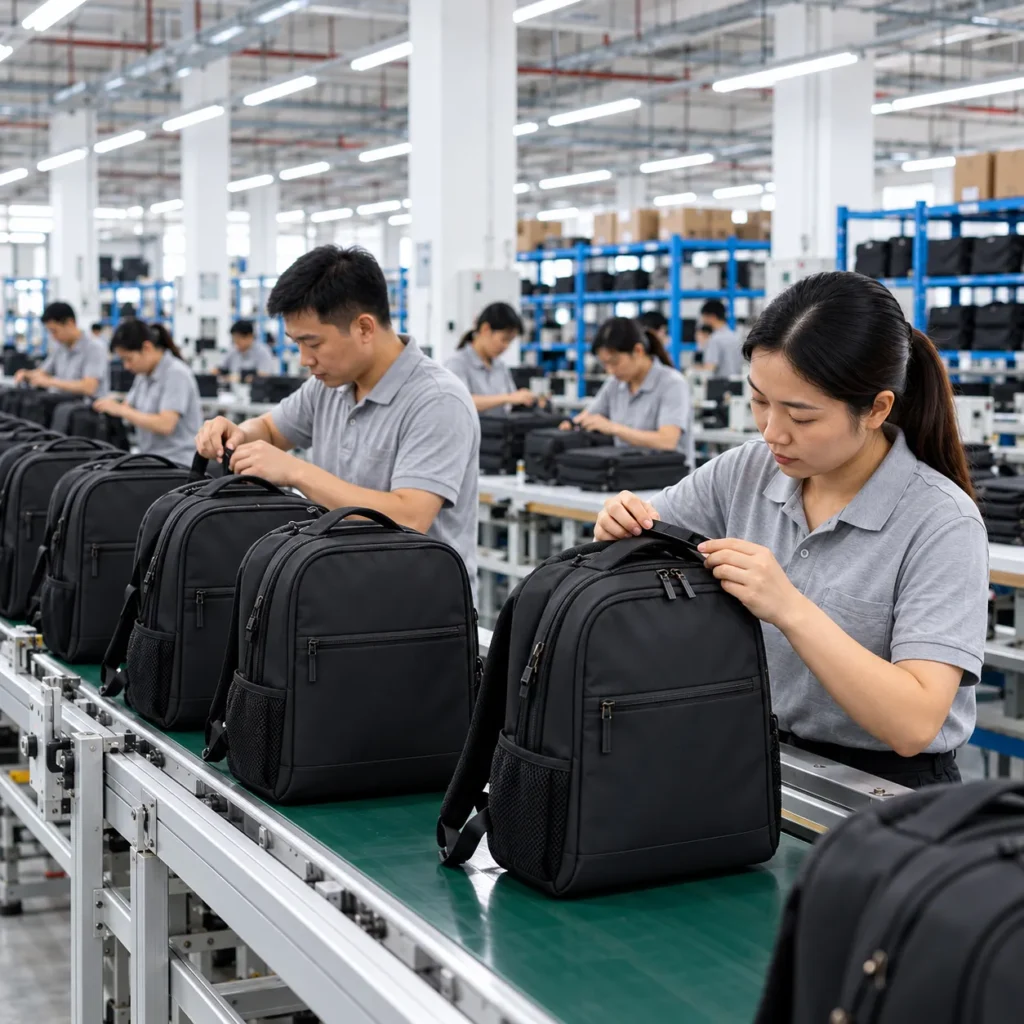
China has one of the most complete supply chains for backpack production.
The country’s advantage is not simply factory size or labor cost. It is the ability to access almost every component required for a backpack within an established manufacturing ecosystem.
Different regions have also developed different specializations.
Guangdong
Guangdong is one of China’s major export-oriented bag manufacturing regions.
Factories in the area have access to suppliers for fabrics, zippers, webbing, buckles, foam, printing, embroidery, metal accessories and packaging.
This makes the region particularly useful for custom backpack programs involving multiple materials or frequent product-development changes.
Fujian
Fujian has a strong connection with outdoor, sports and technical sewn products.
For buyers developing hiking backpacks, sports backpacks or technical bags, access to performance fabrics and outdoor-product experience can be important.
Zhejiang
Zhejiang is well known for luggage, bags, leather goods and related manufacturing.
Different factories specialize in different construction methods, so buyers should still evaluate the individual supplier rather than selecting a province alone.
The biggest advantage of manufacturing backpacks in China is therefore not simply production capacity.
It is supply-chain flexibility.
A backpack may require ten, twenty or even more different materials and components. Having those suppliers within the same manufacturing ecosystem can significantly simplify sampling and production.
Backpack Manufacturing in Vietnam
Vietnam has become an important manufacturing location for international footwear, apparel and bag brands.
Its backpack industry is especially relevant for technical sewing, outdoor products and larger export programs.
Vietnam can be attractive when brands want to diversify manufacturing outside China or develop products that match the technical capabilities available in its textile and cut-and-sew sector.
However, manufacturing in Vietnam does not automatically mean lower cost or shorter lead times.
Some materials and components may still need to be imported, and factory requirements vary considerably according to order size and product complexity.
For buyers, Vietnam should therefore be evaluated on factory capability rather than simply as a substitute for China.
Backpack Manufacturing in India
India has particular strengths in leather, cotton, canvas and other natural materials.
This can make it attractive for lifestyle backpacks, leather backpacks, fashion bags and products where material character is more important than extremely complex technical construction.
Some factories may also offer greater flexibility for specialist or smaller programs.
As with every sourcing market, capabilities vary between factories, and buyers should confirm material sourcing, quality-control procedures and production capacity before placing an order.
Backpack Manufacturing in Bangladesh, Cambodia, Indonesia and Pakistan
These countries form part of the wider Asian textile and sewn-products manufacturing network.
Bangladesh is best known globally for its enormous apparel manufacturing industry and can support high-volume sewn products.
Cambodia also has a substantial garment manufacturing base and participates in international bag and accessory supply chains.
Indonesia combines textile manufacturing with outdoor, lifestyle and regional production capabilities.
Pakistan has a large textile industry and can support fabric-based and sewn-product programs.
However, buyers should avoid choosing a country simply because labor costs appear lower.
Backpacks often require considerably more components than basic garments.
A factory must coordinate fabric, lining, foam, zippers, webbing, buckles, reinforcement materials and packaging while maintaining consistent construction across the production run.
That makes supplier coordination especially important.
Are Backpacks Still Made in the USA?
はい。.
Backpacks are still manufactured in the United States, although American backpack production represents a different manufacturing model from large-scale Asian production.
U.S. backpack manufacturing is more commonly associated with:
- Premium products
- Heritage brands
- Tactical and specialist backpacks
- Repairable products
- Small production runs
- Made-in-USA positioning
Domestic manufacturing generally involves higher labor costs, which means it is difficult to compete directly with Asian factories on large-volume price-driven orders.
However, brands that value domestic origin, local production, shorter communication chains or premium positioning may deliberately choose U.S. manufacturing.
Europe follows a similar pattern in many product categories, with more emphasis on specialist, luxury, technical or heritage production than high-volume mainstream backpack manufacturing.
Do Backpack Brands Manufacture Their Own Backpacks?
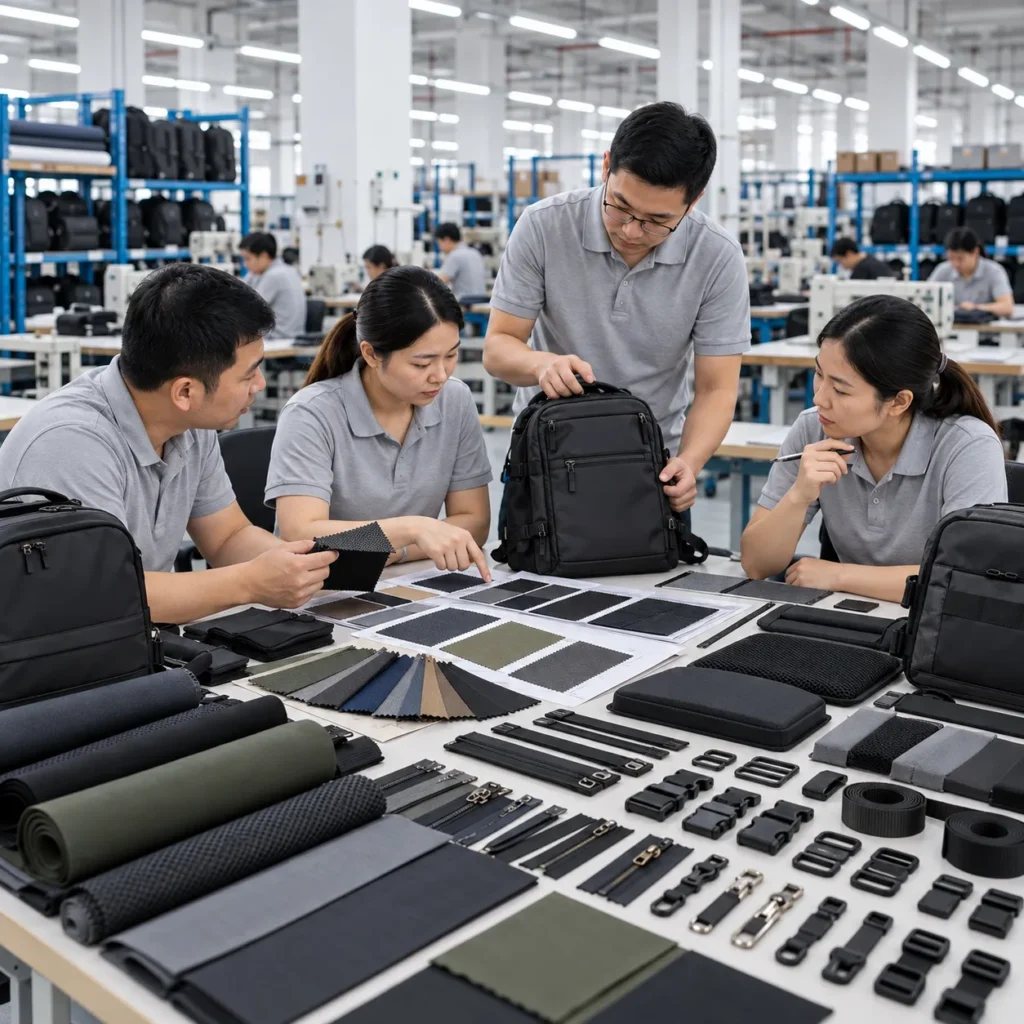
Not always.
Many backpack brands focus primarily on:
Product concept → design → specifications → branding → marketing → distribution
The physical manufacturing may be handled by an independent OEM or ODM backpack factory.
OEM Backpack Manufacturing
OEM stands for OEM(Original Equipment Manufacturer).
In a typical OEM project, the brand provides its own design, tech pack, specifications or reference sample, and the manufacturer develops and produces the backpack according to those requirements.
ODM Backpack Manufacturing
ODM stands for OEMメーカー.
With ODM production, the manufacturer may contribute more heavily to product development, construction, material selection or an existing design platform that can be customized for the brand.
This is why two backpack brands based in the United States or Europe may both manufacture products in Asia while maintaining completely different designs, materials, quality standards and retail prices.
The country of manufacture alone does not determine backpack quality.
The specification and the factory’s ability to consistently reproduce that specification are much more important.
How Are Backpacks Manufactured Inside a Factory?
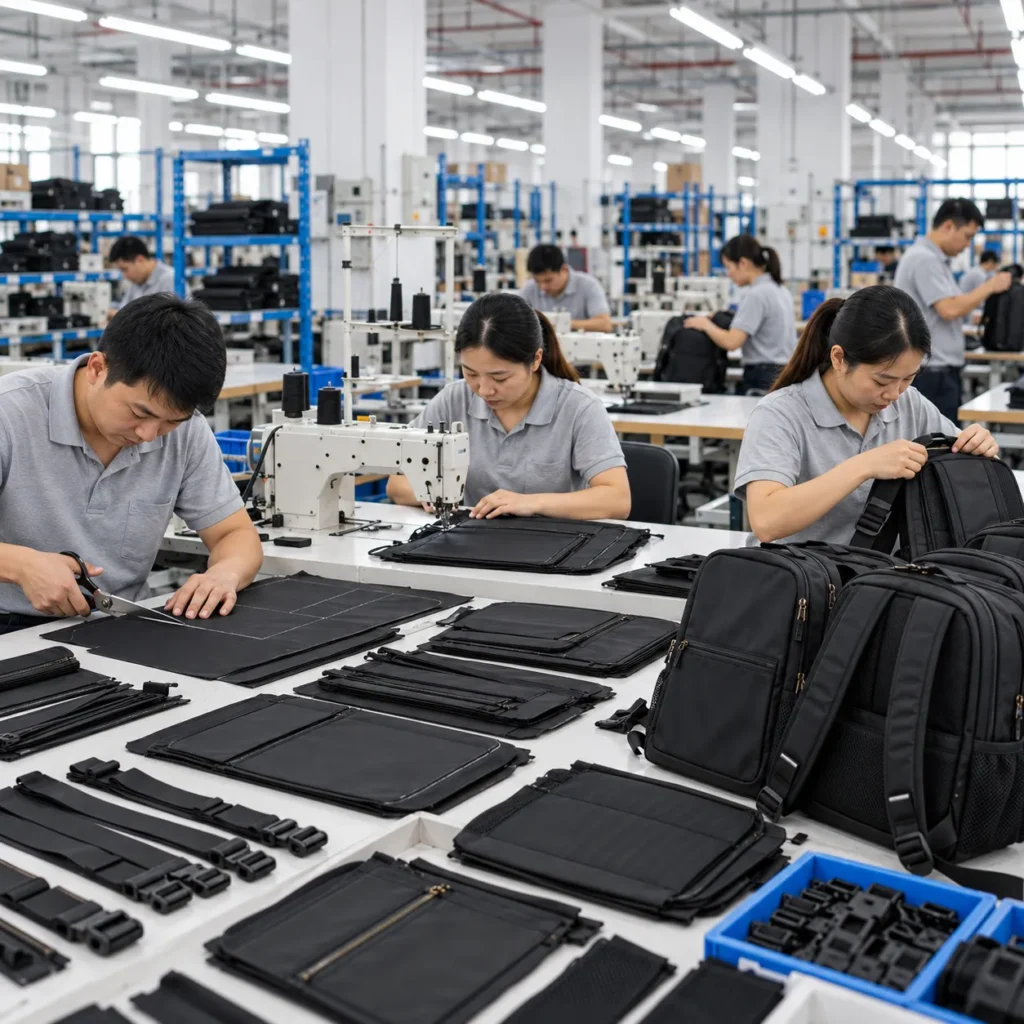
Although manufacturing equipment and production scale vary, most backpack factories follow a similar basic sequence:
Product development → material inspection → cutting → sewing → reinforcement → assembly → finishing → quality inspection → packing
A backpack is usually assembled from multiple separate components rather than sewn together in one continuous process.
Internal pockets and compartments may be prepared first. Main body panels are then sewn together, followed by shoulder straps, handles, back panels, zipper systems and reinforcement areas.
Load-bearing areas such as shoulder-strap attachment points and handles may require additional stitching or bartack reinforcement.
Quality inspections can also take place at several stages rather than only after the backpack has been completed.
For a detailed explanation of the complete process, see:
How Are Backpacks Manufactured?
What Determines Backpack Manufacturing Quality?
Country of origin can influence material availability and production economics, but it does not automatically determine quality.
A high-quality backpack usually depends on several factors working together.
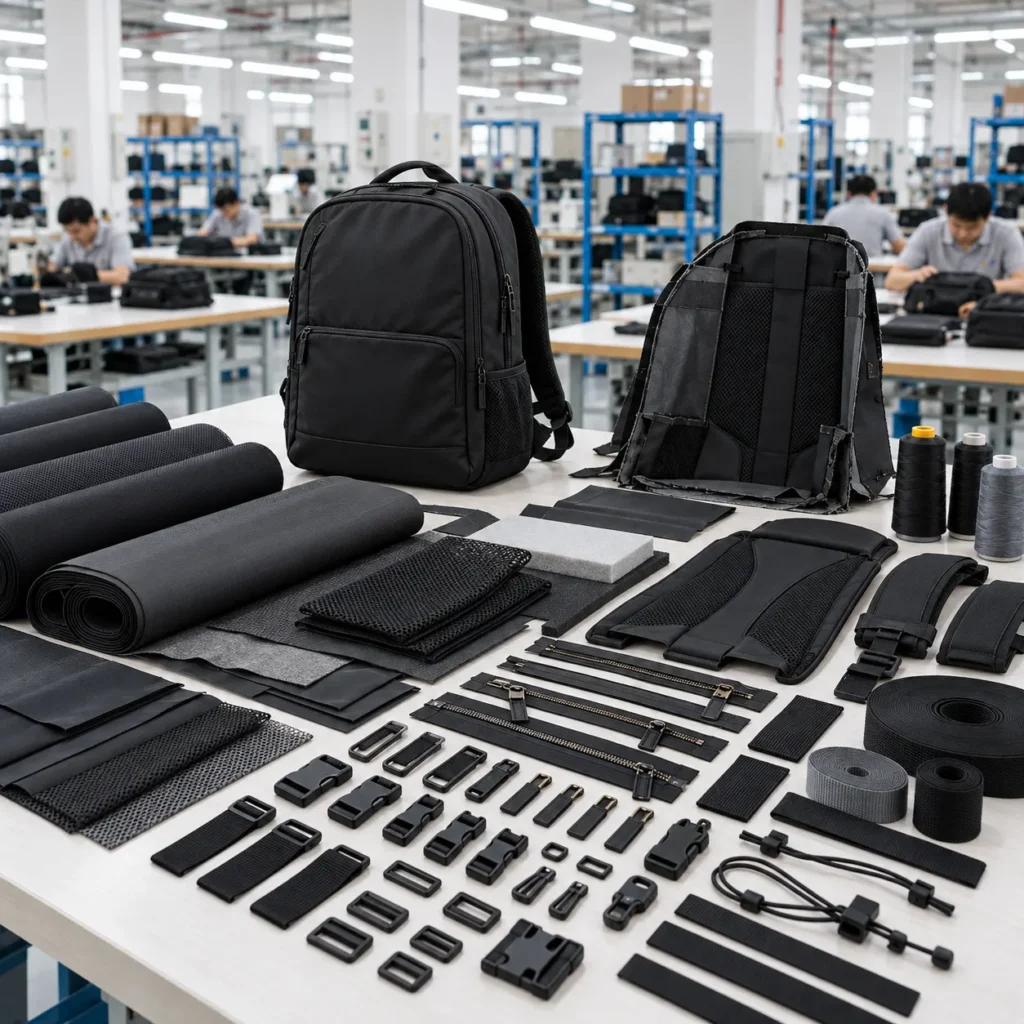
Material Specification
A backpack described simply as “polyester” tells you very little.
The actual specification may involve fabric denier, coating, weave, tear strength, water resistance, colorfastness and finishing.
The same applies to nylon, canvas and recycled materials.
Zippers and Hardware
Zippers, buckles, sliders, hooks and other components influence both performance and product lifespan.
Hardware selection is therefore an important part of product development.
Sewing and Reinforcement
Seam construction, stitch density and reinforcement at load-bearing areas often separate a durable backpack from one that fails prematurely.
Foam and Structural Materials
Laptop compartments, shoulder straps and back panels often require EVA, PE foam or other padding materials.
Their density and thickness influence comfort, protection and the final shape of the bag.
品質管理
Incoming materials, work-in-progress construction and finished backpacks should all be checked against the approved specification.
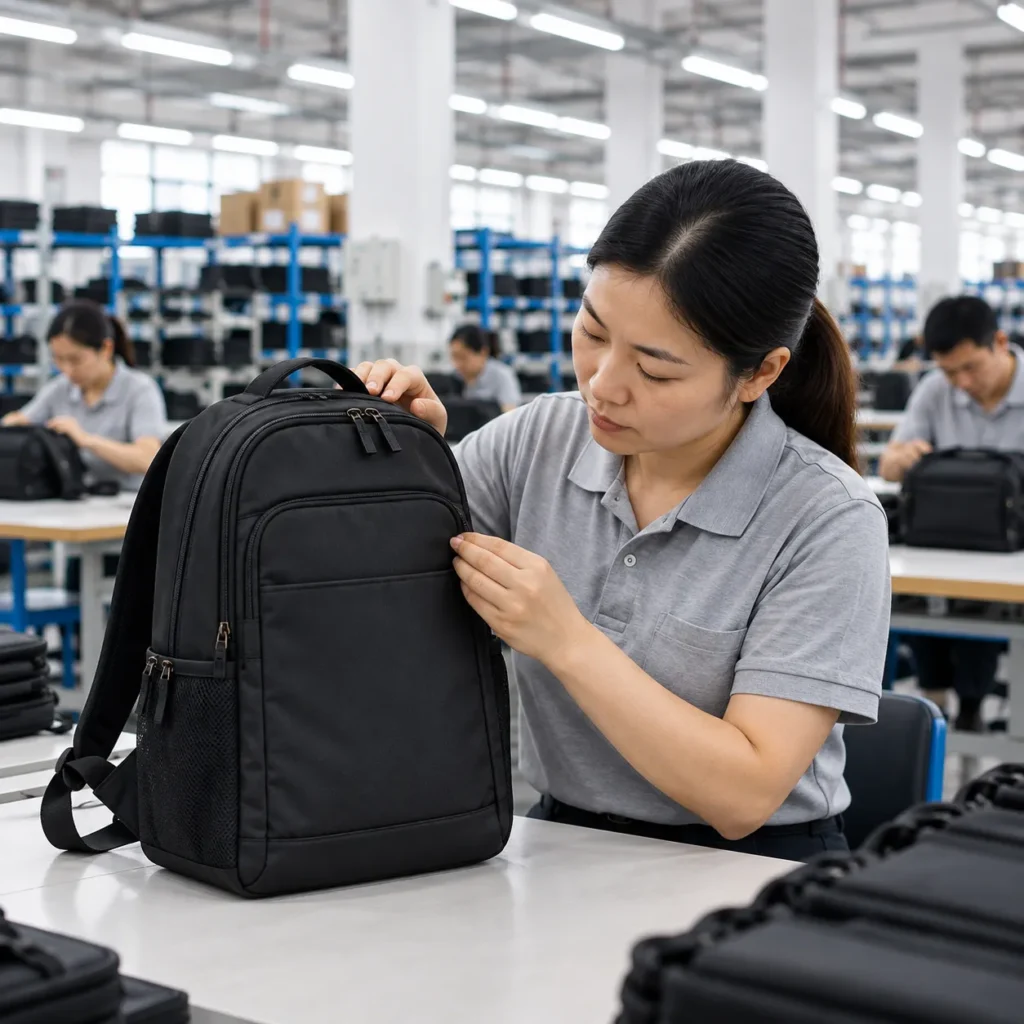
A factory that only inspects the final backpack may discover problems too late in the production process.
What Determines the Cost of Manufacturing a Backpack?
There is no universal backpack manufacturing price.
Two backpacks of the same size can have very different production costs.
Important cost factors include:
Fabric + lining + zippers + hardware + foam + webbing + printing or embroidery + sewing complexity + packaging + order quantity
A basic promotional backpack requires fewer components and less sewing time than a technical hiking backpack with padded shoulder straps, multiple compartments, reinforced load points and coated zippers.
Customization also matters.
Custom fabric colors, molded hardware, special zipper pullers, printed lining, embroidery and private-label packaging can all change both cost and MOQ.
For that reason, brands should compare factory quotations using the same product specification rather than comparing unit prices alone.
Does MOQ Depend on the Manufacturing Country?
Not necessarily.
MOQ varies much more by:
- 工場の規模
- Backpack construction
- Material requirements
- Custom colors
- Custom hardware
- Printing requirements
- Order quantity per color
- Supplier minimums for fabric and accessories
A smaller factory may accept several hundred pieces of a relatively simple backpack, while another factory in the same region may require substantially larger production runs.
Custom fabric, custom hardware or special colors may also create higher material minimums even if the backpack factory itself is willing to produce a smaller quantity.
This is why brands should confirm MOQ at both the finished backpack level and the material level.
Do Tariffs Affect Where Backpacks Are Manufactured?
Yes, particularly when brands compare landed cost rather than factory price.
A backpack’s final landed cost may include:
EXW or FOB price + freight + insurance + import duties + tariffs + customs-related charges
Country of origin and product classification can therefore influence the economics of a sourcing decision.
However, tariff rules can change, and the applicable rate depends on the destination country, country of origin and product classification.
Brands should verify the current customs treatment for their exact backpack before making a manufacturing decision.
The cheapest factory quotation is not always the lowest landed-cost option.
How Should a Brand Choose Where to Manufacture Backpacks?
Start with the backpack, not the country.
A brand developing a technical hiking backpack has different sourcing requirements from a company producing a simple promotional backpack or a leather lifestyle bag.
First define:
Product type → materials → construction → expected order quantity → target price → quality requirements → certification requirements → delivery schedule
Then compare manufacturers capable of meeting those requirements.
China can be particularly attractive when the product requires a broad range of materials, accessories and customization.
Vietnam can be attractive for technical and outdoor sewn products.
India can make sense for certain leather and natural-material programs.
Domestic manufacturing may suit brands prioritizing local origin, small runs or premium positioning.
But the final decision should always come down to the individual factory.
Location sets the manufacturing environment. The factory determines whether your actual backpack can be made correctly.
Brands developing custom products can learn more about OEM and ODM backpack production here:
For projects requiring design changes, materials, logos, custom colors or private labeling:
よくある質問
Which country makes the most backpacks?
China is widely regarded as the world’s largest backpack manufacturing base.
Its advantage comes from a dense network of fabric suppliers, zipper manufacturers, hardware producers, foam suppliers, printing facilities and export-oriented bag factories.
Reliable public statistics that isolate backpacks from the wider bags and luggage category are limited, however, so exact global production shares should be treated cautiously.
Why are so many backpacks made in China?
China developed a highly integrated supply chain for bags, textiles and accessories.
Backpack factories can source fabrics, foam, zippers, buckles, webbing, printing and packaging from nearby suppliers, which makes both product development and mass production easier.
Are backpacks made in Vietnam?
はい。.
Vietnam is an important international manufacturing location for bags, apparel and footwear and has strong capabilities in technical cut-and-sew manufacturing.
Are backpacks made in the USA?
Yes, but U.S. manufacturing is more concentrated in premium, specialist and smaller-production programs than mainstream high-volume backpack production.
Do backpack brands make their own backpacks?
Some do, but many use independent OEM or ODM manufacturers.
The brand may control the design, specifications and quality standards while a specialized backpack factory handles product development, material sourcing, sampling and production.
Is a backpack made in China necessarily lower quality?
No.
Country of origin alone does not determine product quality.
Materials, construction specifications, workmanship, reinforcement methods and quality-control systems are much more important.
China manufactures backpacks across a very wide range of price and quality levels.
What is the minimum order quantity for custom backpacks?
There is no universal MOQ.
It depends on factory size, product complexity, material minimums, colors and customization.
Custom fabric, custom hardware and special packaging can increase MOQ even when the backpack factory itself is able to produce smaller quantities.
How long does backpack manufacturing take?
Production time depends on order quantity, material availability, customization and factory capacity.
Sampling takes place before mass production, and custom fabric or hardware can add additional time.
The production schedule should therefore be confirmed after the design and materials have been finalized.
What should I look for in a backpack manufacturer?
Look beyond price.
Evaluate the manufacturer’s experience with your backpack category, material sourcing capability, sampling process, production equipment, quality-control procedures, communication and ability to reproduce the approved sample during mass production.
結論
So, where are backpacks made?
Most large-scale backpack production is concentrated in Asia, especially China and Vietnam, with India, Bangladesh, Cambodia, Indonesia and Pakistan supporting different segments of the industry. Smaller premium and specialist manufacturing also remains in the United States and Europe.
But the country name on the label is only the beginning.
The real manufacturing advantage comes from the industrial cluster behind the factory: fabric suppliers, zipper manufacturers, hardware suppliers, skilled sewing workers, finishing facilities and export logistics all working together.
For brands developing their own backpack, the better question is therefore not simply:
“Which country should I manufacture in?”
It is:
“Which manufacturing ecosystem and factory are best equipped to produce my backpack specification consistently?”
Once the product requirements are clear, manufacturing location becomes much easier to evaluate.