
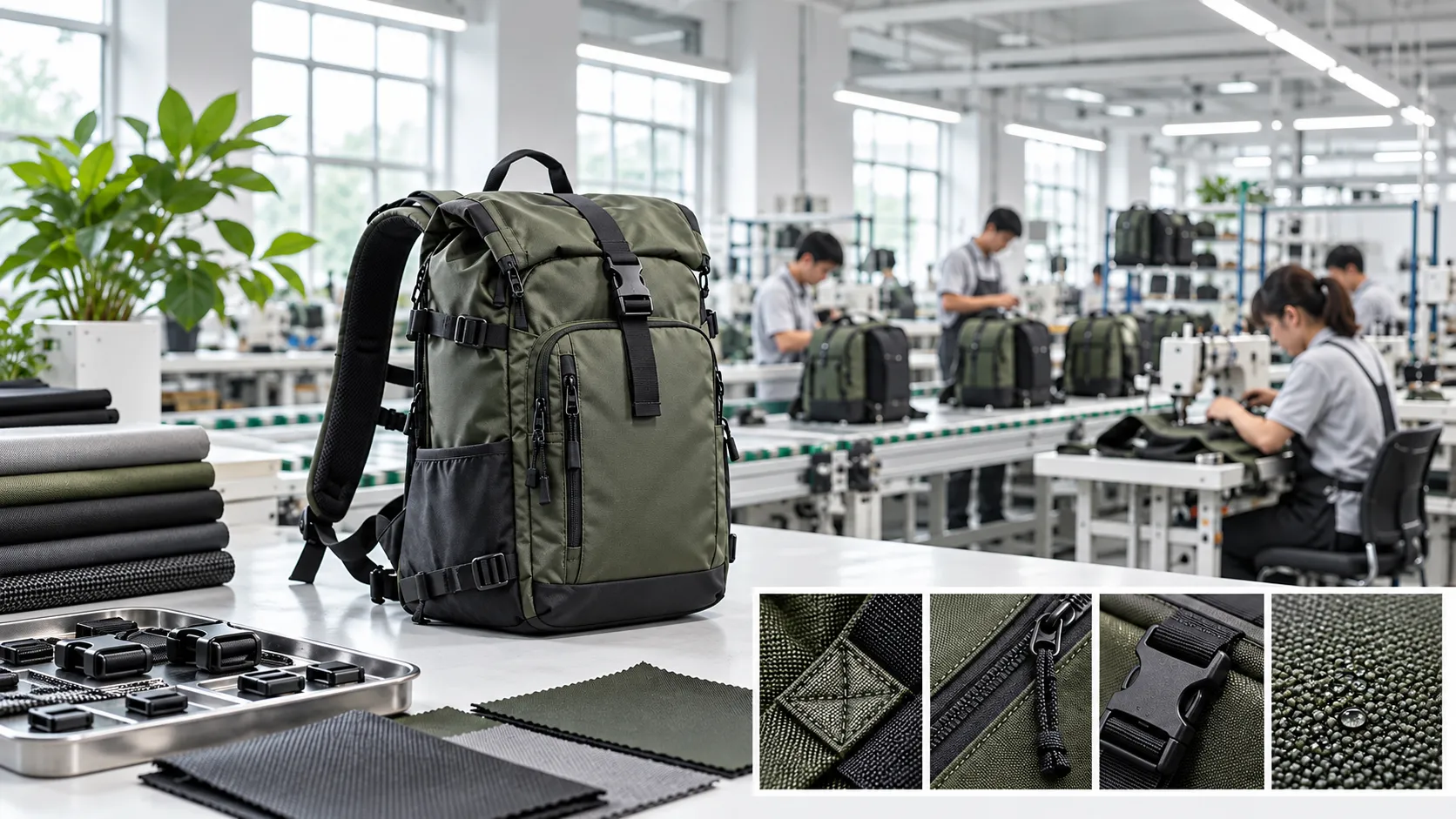
Every backpack brand claims durability, comfort, and quality. Far fewer explain what those claims actually mean.
For shoppers, that creates a simple problem: price, color, size, and style are easy to compare, but the details that determine whether a backpack will survive years of daily use are often hidden in the fabric, zippers, stitching, reinforcement, harness construction, and quality-control process.
So, who makes good backpacks?
Brands such as Osprey, Deuter, Gregory, Patagonia, Arc’teryx, Aer, GORUCK, Peak Design, and TOM BIHN are commonly associated with well-built backpacks in different categories. However, no brand is automatically the best choice for every user.
A better way to judge a backpack is to look at whether its quality claims can actually be verified.
This guide explains what makes a backpack brand good, how to recognize a well-made backpack, and why materials, hardware, stitching, water resistance, manufacturing quality control, and warranty terms matter more than a logo.
What Makes a Backpack Brand Good?
A good backpack brand does more than describe a product as “premium,” “durable,” or “built to last.”
It gives you enough information to understand why.
Five signals are especially useful:
- Clearly specified materials
- Reliable zippers, buckles, and hardware
- Reinforcement at major stress points
- Appropriate water-resistance construction
- Documented quality control and warranty support
The important point is that these elements work together.
A premium fabric alone does not make a premium backpack. A bag may use branded fabric but still fail because of a weak zipper, poor stitching, badly reinforced shoulder straps, or inconsistent production.
Likewise, a long warranty can sound impressive, but what matters is what the warranty actually covers and whether the brand offers repair support after normal wear.
Key Takeaway
A good backpack brand should make its quality reasonably easy to verify.
Look beyond the logo and ask:
What is the backpack made from, how is it constructed, and who stands behind it after it is sold?
Who Makes Good Backpacks?
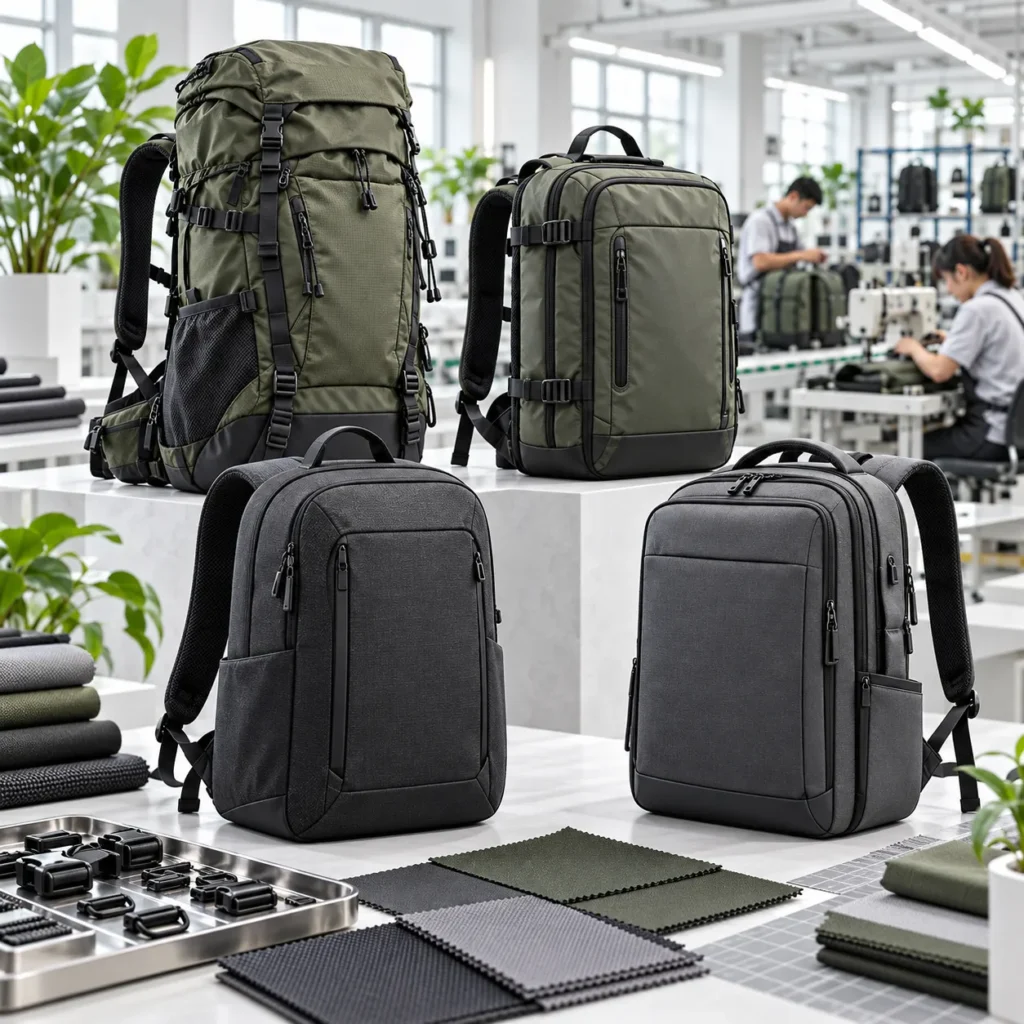
There is no single backpack brand that is best for every person or every use.
Different brands tend to focus on different markets.
Osprey, Gregory, and Deuter are commonly associated with hiking and trekking backpacks.
Patagonia and Arc’teryx are strongly connected with outdoor equipment and technical products.
Aer and Peak Design are commonly seen in urban, travel, and everyday-carry categories.
GORUCK is known for heavy-duty packs, while TOM BIHN has built a reputation around travel and everyday carry.
But brand reputation should only be the beginning of your evaluation.
A better question is:
What does this particular backpack actually offer?
When comparing brands, look at four layers:
- Materiales
- Hardware
- Construction
- Warranty and after-sales support
This helps separate a genuinely well-built backpack from one relying mainly on branding.
Start With Your Use Case
Before comparing backpack brands, decide what the backpack actually needs to do.
A lightweight commuter backpack and a multi-day hiking pack should not be judged by exactly the same standards.
Think about:
- How much weight will you carry?
- How long will you carry it?
- Will the backpack be exposed to rain?
- Do you need laptop or electronics protection?
- How often will you use it?
- How many years do you expect it to last?
Your answers determine which specifications matter most.
| Your Requirement | What to Check |
|---|---|
| Heavy loads | Harness structure, shoulder straps, hip belt, reinforcement |
| Long carrying periods | Fit, padding, ventilation, load transfer |
| Wet conditions | Coating, seam construction, zipper protection |
| Laptop protection | Padding, compartment structure, panel construction |
| Long service life | Hardware, stitching, reinforcement, warranty |
A backpack that is excellent for commuting may not be suitable for trekking.
The right question is therefore not simply:
“Is this a good backpack?”
It is:
“Is this a good backpack for the way I plan to use it?”
What Materials Do Good Backpack Brands Use?
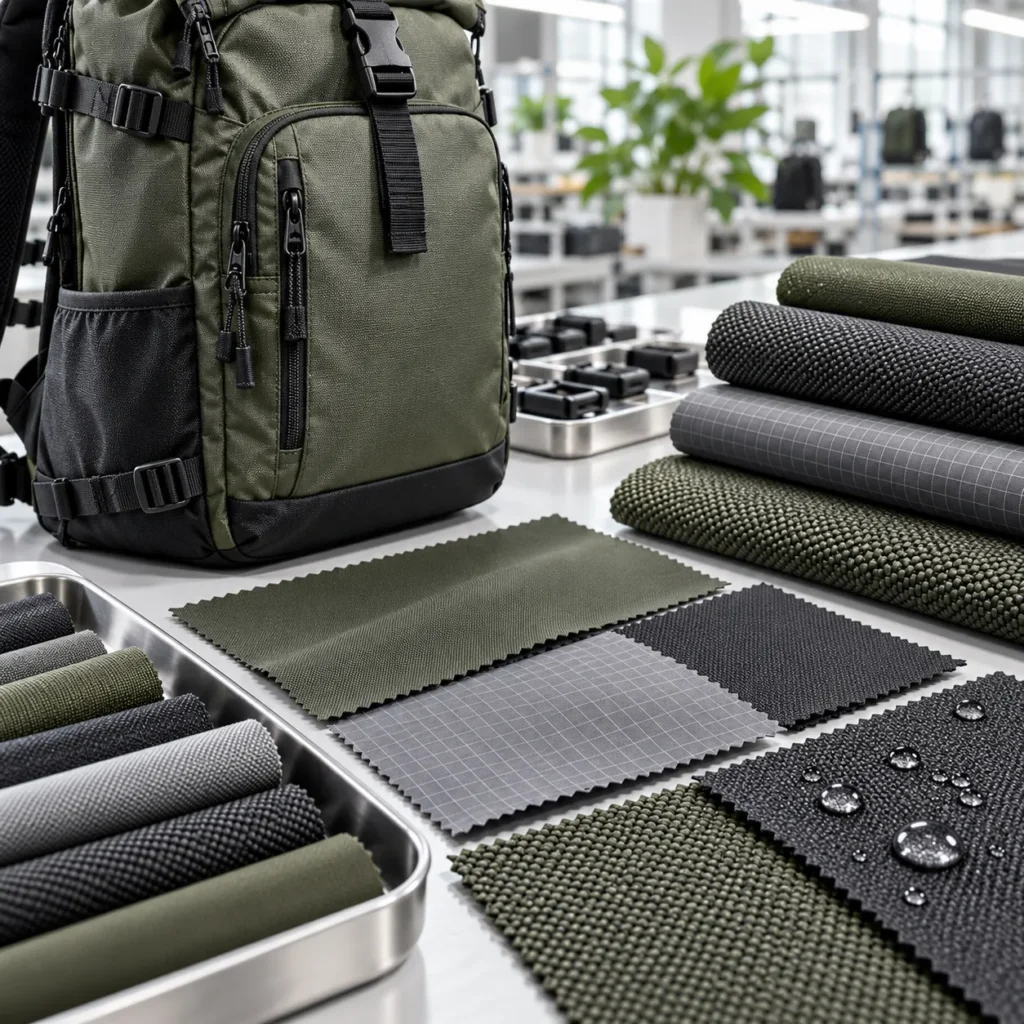
Fabric is one of the first specifications people notice when comparing backpacks.
One common specification is denier, often shown as 210D, 420D, 500D, or 1000D.
Denier describes the linear density of the yarn used in the fabric.
In general, heavier-denier fabrics can provide more abrasion resistance, but a larger number does not automatically mean a better backpack.
What matters is where the material is used.
For example:
- Lighter fabrics may be suitable for internal compartments or lightweight backpack bodies.
- Medium-weight fabrics can work well for everyday backpacks.
- Heavier materials may be more appropriate for backpack bottoms, high-wear panels, outdoor equipment, or heavy-duty bags.
A well-designed backpack often combines several material weights instead of using the heaviest fabric everywhere.
That helps balance:
- Peso
- Durabilidad
- Flexibility
- Cost
- Comodidad
What About CORDURA?
CORDURA is a branded performance fabric used in many outdoor, tactical, travel, and heavy-duty products.
However, a CORDURA label relates to the fabric rather than the quality of the entire finished backpack.
That distinction matters.
A backpack can use a premium fabric and still have weak stitching or low-quality hardware.
When comparing backpacks, treat branded fabric as one positive signal—not as proof that the complete bag is high quality.
Do Good Backpack Brands Use Better Zippers and Hardware?
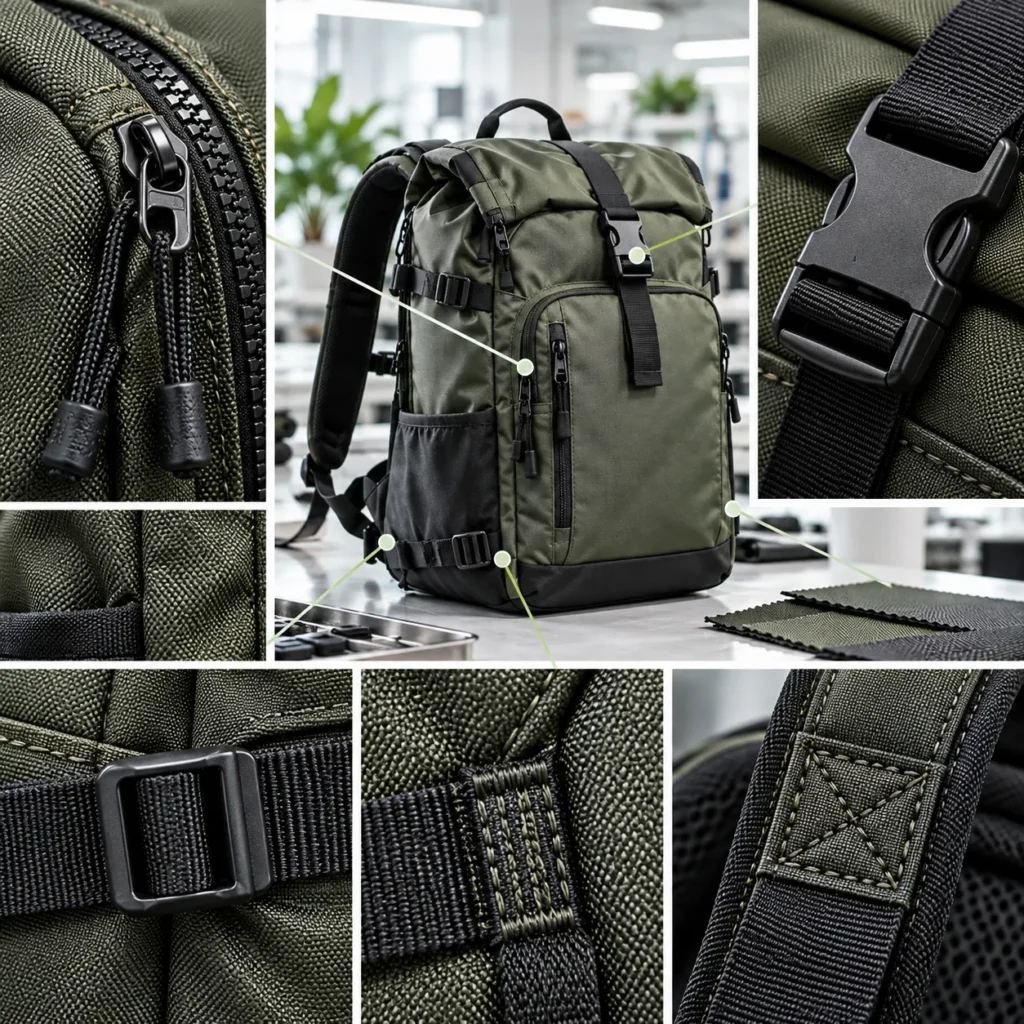
Zippers are among the most frequently used components on a backpack.
A great fabric will not help much if the main zipper fails after a year.
When comparing backpacks, look at:
- Zipper brand
- Zipper size
- Zipper type
- Slider construction
- Hebillas
- Adjustment hardware
- Attachment points
Different areas of a backpack may use different zipper sizes.
Small internal pockets can use lighter zippers, while main compartments on larger bags normally require stronger components.
Common zipper constructions include:
- Coil zippers
- Cremalleras de plástico moldeado
- Cremalleras metálicas
The correct choice depends on the intended application.
A lightweight city backpack does not require the same hardware as a heavy travel pack or tactical backpack.
Why Named Hardware Matters
When a manufacturer or brand specifies recognized components such as YKK zippers, it gives buyers something concrete to evaluate.
“Premium zipper” is a marketing claim.
“YKK #8 zipper on the main compartment” is a specification.
That difference tells you a lot about how seriously a brand approaches product construction.
How Can You Tell If a Backpack Is Well Made?
One of the easiest ways to judge a backpack is to inspect the areas where load is transferred.
Backpacks rarely fail in the middle of a large fabric panel.
Failures are more likely to happen where:
- Shoulder straps connect to the body
- Handles attach to the top panel
- Compression straps meet side panels
- Hip belts connect to the backpack
- Heavy-load seams intersect
These areas are known as stress points.
Good backpack construction normally reinforces them.
Common reinforcement methods include bartacks y box-X stitching.
A bartack is a dense section of stitching used to strengthen a small, high-stress area.
A box-X pattern spreads force across a wider attachment area.
A Simple Inspection Test
Look closely at where the shoulder straps connect to the backpack.
Ask:
- Is the stitching straight and consistent?
- Is there visible reinforcement?
- Are loose threads present?
- Does the strap appear to be secured across a wide area?
- Does the connection deform when you pull on it?
These details can reveal more about backpack quality than decorative features on the front panel.
Comfort Is More Than Padding
Many people judge backpack comfort by touching the shoulder straps.
Soft padding can feel impressive in a store, but long-term comfort depends on more than foam thickness.
Look at the whole harness system.
This may include:
- Tirantes
- Panel trasero
- Correa para el esternón
- Cinturón lumbar
- Internal frame or frame sheet
- Elevadores de carga
- Ventilation channels
A properly designed harness helps keep the backpack stable and distributes weight more effectively.
For hiking, trekking, and heavier travel packs, load transfer becomes especially important.
For small commuter backpacks, a simpler harness may be completely appropriate.
Again, the correct design depends on the intended load.
How Important Is Water Resistance?
“Water-resistant” and “waterproof” are not the same thing.
Many everyday backpacks are water-resistant rather than fully waterproof.
Water resistance may come from:
- PU coatings
- TPU laminations
- Durable water-repellent finishes
- Water-resistant zippers
- Covered zipper tracks
- Taped or sealed seams
A DWR treatment can help water bead on the surface, but it does not automatically make a backpack waterproof.
Likewise, waterproof fabric does not guarantee a waterproof finished product if stitched seams allow water to enter.
For users who regularly carry electronics or travel in heavy rain, construction around seams and openings matters as much as the fabric itself.
Ask the Right Question
Instead of asking:
“Is this backpack waterproof?”
Ask:
“What makes this backpack resistant to water?”
A credible brand should be able to explain the construction behind the claim.
Quality Control Matters More Than Most Buyers Realize
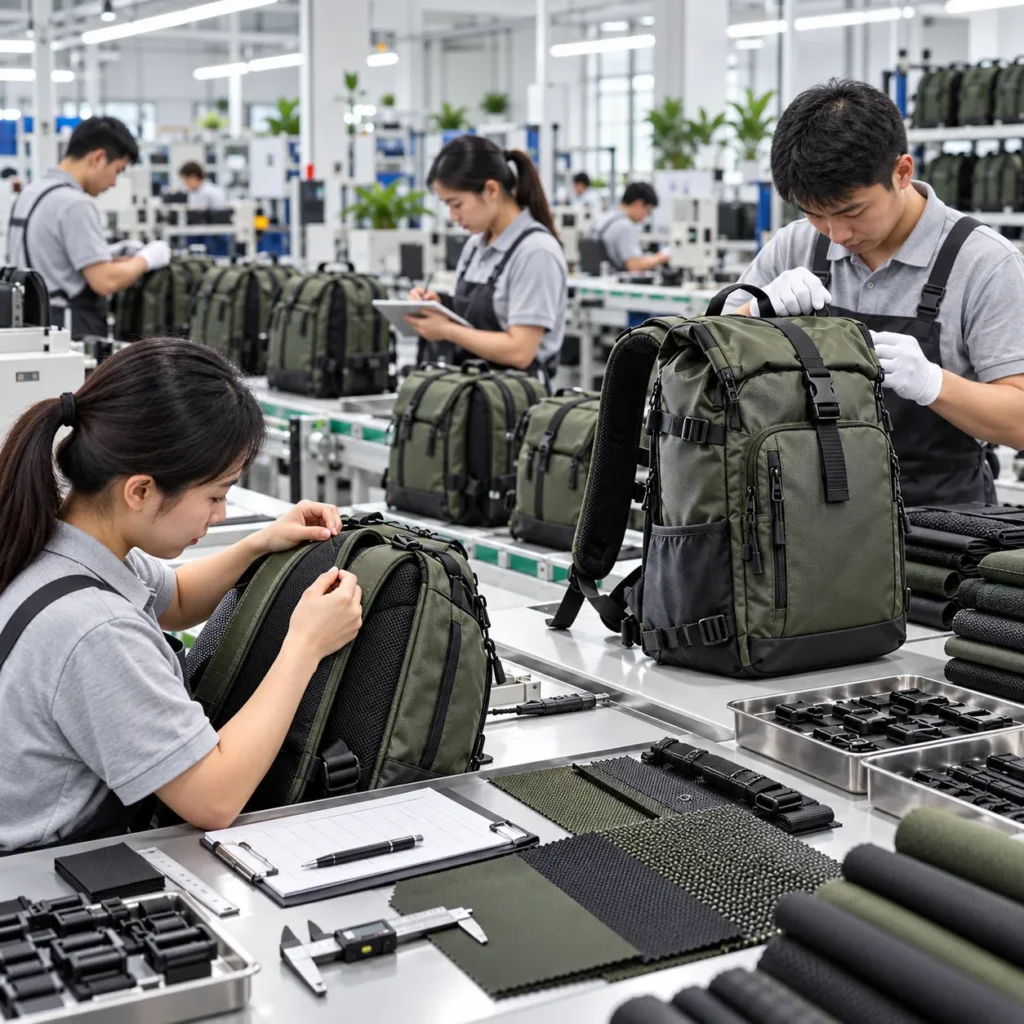
Consumers normally see the finished backpack.
They do not see what happened during production.
But much of backpack quality is determined before the product reaches a store.
Professional backpack manufacturing commonly includes several quality-control stages.
Incoming Material Inspection
Fabric, webbing, zippers, buckles, thread, labels, and other components can be checked before production begins.
This helps prevent material problems from moving into the sewing process.
In-Process Quality Control
During cutting, sewing, and assembly, inspectors can identify:
- Stitching problems
- Incorrect dimensions
- Misaligned panels
- Hardware issues
- Logo placement problems
- Construction inconsistencies
Finding these problems during production is much more efficient than discovering them after the backpack is finished.
Final Inspection
Finished backpacks may then be checked for:
- Appearance
- Dimensions
- Function
- Cremalleras
- Hebillas
- Costura
- Packaging
- Labels
For brands, importers, and distributors, this production consistency matters because customers expect the same quality from every unit—not just from the original sample.
Good Backpack Brands Usually Start With Good Manufacturing
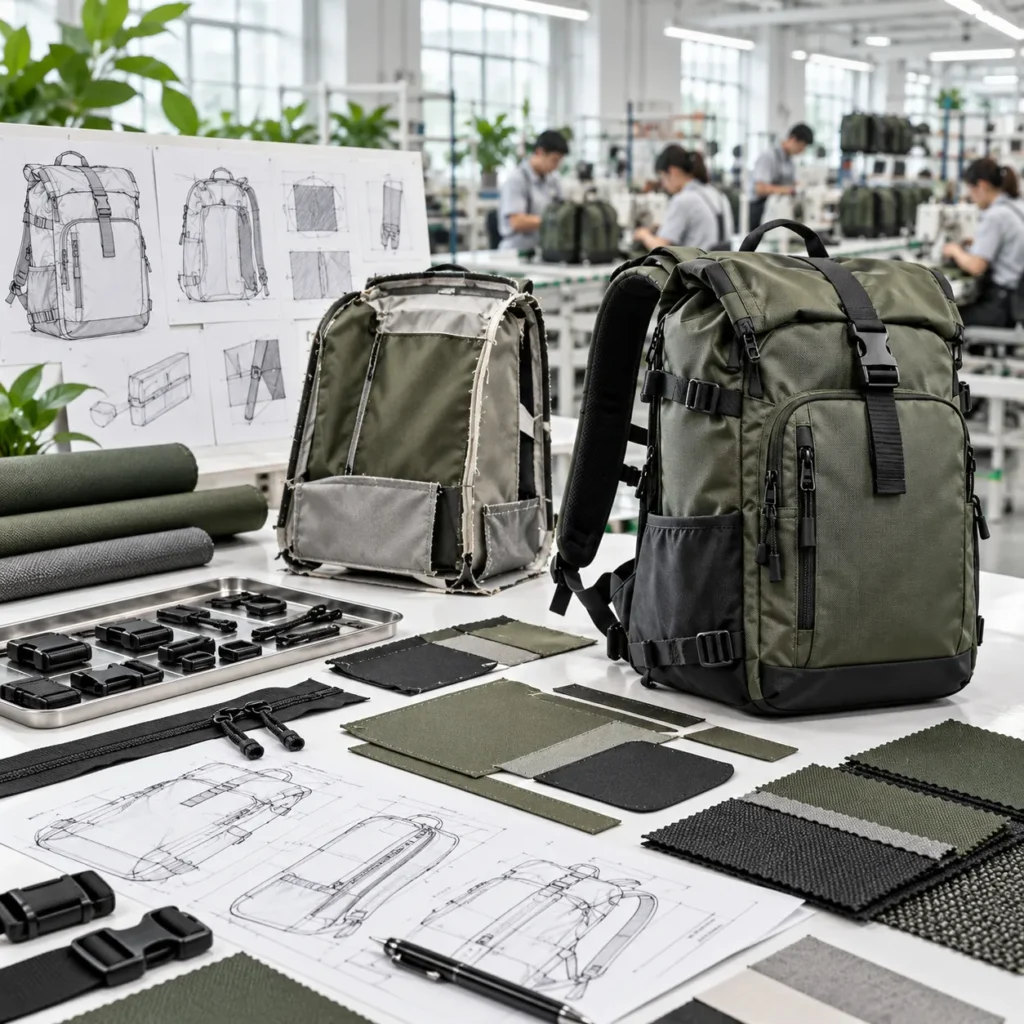
Consumers usually interact with the brand name printed on the backpack.
Behind that brand, however, there may be an entire development and manufacturing process.
For many backpack companies, especially private-label and emerging brands, product quality is built through collaboration between the brand and its backpack manufacturer.
Important decisions happen long before mass production begins.
These can include:
- Material selection
- Pattern development
- Prototype construction
- Sample testing
- Zipper and buckle specification
- Padding thickness
- Reinforcement design
- Logo application
- Color matching
- In-line inspection
- Final quality control
A good backpack manufacturer does not simply sew together the materials a customer provides.
It helps turn a design concept into a repeatable production specification.
That repeatability is essential.
A great sample means little if production units vary in stitching, dimensions, hardware, or material.
For backpack brands, wholesalers, importers, and distributors, choosing the right backpack manufacturer is therefore part of building a quality brand—not simply a sourcing decision.
If you are interested in the factory side of the process, our guide to how backpacks are manufactured explains the major steps from material preparation and cutting through sewing, assembly, inspection, and packing.
You can also learn more about Tamador’s backpack manufacturing services y custom backpack manufacturing for private-label and OEM/ODM projects.
What Should You Look for in a Backpack Warranty?
A warranty can tell you how much confidence a brand has in its products.
But the headline alone is not enough.
Terms such as:
- Lifetime warranty
- Limited lifetime warranty
- Two-year warranty
- Repair guarantee
can mean very different things.
Read the exclusions.
Many warranties cover defects in materials or workmanship but exclude:
- Normal wear
- Abrasion
- Accidental damage
- Improper use
- Unauthorized repairs
That is not necessarily a problem.
Backpacks wear over time.
What matters is whether the policy is transparent.
Some established brands also provide repair services after warranty coverage has ended, which can extend the practical life of a backpack.
A readable warranty is usually more useful than an impressive headline with vague conditions.
Red Flags When Comparing Backpack Brands
A missing premium feature is not automatically a problem.
An unverifiable quality claim is.
Be cautious when a backpack is described using phrases such as:
- Military-grade durability
- Ultra-premium construction
- Completely waterproof
- Lifetime quality
- Unbreakable hardware
without supporting specifications.
For example, “waterproof” means little without explaining the fabric construction, coating, seams, or closures.
Likewise, “extremely durable” is difficult to evaluate if the brand provides no information about material, stitching, or hardware.
Another warning sign is when a backpack emphasizes one premium component while providing almost no information about the rest of the product.
A branded fabric is useful.
A branded zipper is useful.
Neither guarantees that the complete backpack has been designed and manufactured well.
How to Choose a Good Backpack Brand
You do not need to become a textile engineer to choose a good backpack.
A simple process is enough.
1. Define Your Use
Decide whether you need the backpack for:
- Commuting
- Colegio
- Laptop carry
- Viajes
- Hiking
- Outdoor activities
- Heavy-duty work
2. Check the Materials
Look for actual fabric specifications rather than vague descriptions.
3. Inspect the Hardware
Pay attention to main zippers, buckles, and adjustment hardware.
4. Look at Stress Points
Shoulder-strap attachments and carrying handles deserve special attention.
5. Evaluate Comfort
Consider the whole harness system rather than padding alone.
6. Check Water-Resistance Claims
Find out what construction supports the claim.
7. Read the Warranty
Do not stop at the word “lifetime.”
Read what is included and excluded.
8. Compare the Product, Then the Brand
A useful rule is:
Judge the backpack by its construction and the brand by its consistency.
A respected brand can still produce different quality levels across different product ranges.
Likewise, a less-famous brand can produce a very good backpack if the design, materials, manufacturing, and quality control are right.
Which Backpack Features Matter Most for Different Users?
| User Type | Most Important Features |
|---|---|
| Daily commuter | Comfortable straps, reliable zippers, laptop protection, moderate weight |
| Student | Storage organization, zipper durability, reinforced straps |
| Frequent traveler | Main-compartment hardware, organization, warranty, carrying comfort |
| Hiker | Harness fit, load transfer, abrasion resistance, weather protection |
| Heavy-duty user | Strong fabric, reinforced stress points, heavy-duty hardware |
There is no need to pay for technical features that do not match your use.
The goal is not to buy the most heavily built backpack.
It is to buy the backpack whose construction matches what you actually need.
Preguntas frecuentes
Who makes good backpacks?
Osprey, Deuter, Gregory, Patagonia, Arc’teryx, Aer, GORUCK, Peak Design, and TOM BIHN are among the brands commonly associated with well-built backpacks in different categories. However, the best choice depends on your intended use, and individual backpack construction matters more than brand reputation alone.
What makes a backpack brand good?
A good backpack brand usually combines appropriate materials, reliable hardware, reinforced construction, clear product specifications, consistent quality control, and transparent warranty support.
How can you tell if a backpack is good quality?
Check the fabric, zippers, buckles, shoulder-strap attachment points, stitching consistency, padding, harness design, and warranty. Stress points and hardware are especially useful indicators.
Is a higher denier always better?
No. Higher denier generally means heavier yarn, but the correct material depends on the backpack’s intended use and the panel where it is used. A lighter fabric can be the better choice when weight and flexibility matter.
Does CORDURA mean a backpack is high quality?
CORDURA can indicate the use of a recognized performance fabric, but it does not guarantee the quality of the complete backpack. Hardware, stitching, design, and manufacturing quality still matter.
Are expensive backpack brands worth it?
Sometimes. Higher prices may reflect better materials, hardware, construction, design, warranty support, or brand positioning. Compare the actual specifications rather than assuming price always equals quality.
Is a waterproof backpack really waterproof?
Some are, but many products marketed for wet conditions are technically water-resistant. True waterproof performance depends on fabric, coatings, seams, closures, and overall construction.
Which backpack brands are commonly known for quality?
Osprey, Gregory, and Deuter are frequently associated with hiking and trekking. Patagonia and Arc’teryx are strongly connected with outdoor products. Aer and Peak Design are commonly seen in urban and travel categories, while GORUCK is associated with heavy-duty packs.
Reflexiones finales
So, who makes good backpacks?
The simplest answer is that good backpacks are made by brands—and manufacturers—that treat quality as a system rather than a marketing claim.
The logo matters less than what sits behind it.
Busca:
- Appropriate fabrics
- Reliable hardware
- Puntos de mayor tensión reforzados
- Comfortable load-carrying construction
- Honest water-resistance claims
- Consistent quality control
- Clear warranty terms
No single brand is best for every user.
A commuter, traveler, hiker, student, and heavy-duty user all need different things from a backpack.
The most reliable approach is therefore to evaluate the product first and use brand reputation as supporting evidence.
And for backpack brands themselves, quality starts even earlier.
It begins with material specifications, prototype development, hardware selection, construction standards, production consistency, and factory quality control.
Tamador is an OEM/ODM bag manufacturer in Guangzhou, China, with more than 20 years of experience supporting brands, wholesalers, importers, and distributors with custom backpack development and production.
If you are building a backpack line, the same details consumers use to judge quality—materials, zippers, reinforcement, comfort, and consistency—are the decisions that need to be made correctly during product development and manufacturing.
Planning a custom backpack project? Explore Tamador’s backpack manufacturing solutions to see how design concepts are developed into production-ready products.